• The Mind Gym: 10 instant mood boosters

    Every Friday, I post a few thoughts about being mentally fit, I’ve called it, “The Mind Gym.”

    When we feel out of shape physically we go to a conventional gym and start to do some exercises that will improve our physical fitness. As a society we are out of shape mentally. We have record levels of anxiety, hopelessness and depression. That’s why I wanted to create something that might help with our mental fitness.

    Go outside

    Take 5 deep breaths

    Call to mind a great memory

    Smile

    Think of something you are truly grateful for

    Contact someone you are truly grateful for

    Tell yourself you are loved

    Listen to some favourite music

    Think of something you are looking forward to

    Meet a friend

    Let’s work together towards mental fitness. Don’t just accept being out of shape.

  • How Jewish tradition views leadership: Everyone a leader.

    Introduction

    In many circles, leadership is often associated with positions of power such as CEOs, presidents, and managers. However, in Jewish tradition, this is not the case. The Torah actually emphasizes the potential for everyone to be a leader, promoting the concept of shared leadership based on Jewish values. It’s a pretty cool idea, don’t you think?

    The Idea of Leadership in the Torah it

    In Jewish tradition, leadership is rooted in the idea that each individual has a distinct purpose and role in the world. This belief can be traced back to the story of creation, where God creates humankind in his image and charges them with the task of caring for and cultivating the world. The Torah teaches that every person possesses a divine spark within them, and that it is their responsibility to utilize their talents and abilities to improve the world.

    In addition, leadership is not limited to a select group of individuals. Every person has the potential to be a leader in their own unique way. Consider Moses, for instance. Initially, he was hesitant to take on a leadership role, but he eventually embraced it and guided the Israelites out of slavery in Egypt. Moses’ story illustrates that leadership is not defined by titles or positions, but rather by assuming responsibility and employing one’s talents to benefit others.

    Implications for Individuals and Communities

    The idea of shared leadership has some pretty important implications for both individuals and communities. For individuals, it means that they have a responsibility to use their talents and abilities to make a positive impact on the world. And even if they don’t have a fancy title or position, they’ve still got the potential to be a leader.

    For communities, the idea of shared leadership means that everyone has a role to play in creating a strong and vibrant community. Leadership shouldn’t just be concentrated in a select few people. Instead, it should be distributed among many people. This approach to leadership can create a more inclusive and collaborative community, where everyone’s contributions are valued and appreciated.

    Plus, the Jewish idea of shared leadership encourages folks to recognize their unique talents and abilities and use them to serve their community. This approach to leadership values every person’s contribution, regardless of their title or position, and promotes a sense of community ownership and responsibility.

    Another key implication of shared leadership is that it promotes a culture of collaboration and teamwork. When everyone is encouraged to contribute their ideas and talents, it fosters a sense of collaboration and mutual respect. This can lead to the creation of more innovative and effective solutions to complex problems.

    Conclusion

    The Jewish idea of leadership is definitely a game-changer. It challenges us to rethink our assumptions about who can be a leader and what leadership looks like. It teaches us that everyone has the potential to be a leader and that leadership isn’t limited to those with titles or positions. By embracing this idea of shared leadership, we can create more inclusive and collaborative communities, where everyone’s contributions are valued and appreciated. Furthermore, this approach to leadership promotes a culture of collaboration, innovation, and mutual respect, which can lead to more effective solutions to complex problems.

    For further reading on this I recommend the book below.

  • 8 signs that a “Who’s Next” culture is missing.

    As a church we are continually striving to have a “who’s next” culture, to empower the next generation and continually raise up new leaders.

    Here are 10 signs of that culture being missing.

    1. You see the same faces all of the time.

    You don’t want to stop seeing those faces but creating a who’s next culture means introducing some new ones.

    2. It’s hard to get into the circle.

    Circles close really quickly. You see it in teams, in breakouts, in foyers and meetings. There’s a circle and you’re not in it. Teach people to widen the circle, to invite someone in.

    3. People protect their space.

    People have a scarcity mindset not an abundance mindset. The think, perhaps even subconsciously, ‘more for you, less for me.’ Teach people that we live in an abundant Kingdom.

    4. Envy is strong.

    The bible teaches us to “Rejoice with those that rejoice…” when people struggle to celebrate the wins of others, “who’s next” is under fire.

    5. No prayer about it

    We stop asking and believing that the new will come, that things will grow and others will be added to us. “Pray,” Jesus said, “to the lord of the harvest that he will send forth labourers into the harvest fields.” Matthew 9:38

    6. There’s no focus on development and no counsel is sought.

    Proverbs 15:22, “Without counsel, plans fail. With many advisors, they succeed.”

    7. Ministries have no evangelistic spirit… no on ramps.

    It’s just us, – this is what we like, this will keep us happy…

    8. There’s no investing and no inviting.

    Teams, groups that are designed to raise leaders spend time investing and inviting.

    Go for it, Create a who’s next culture.

  • The Mind Gym – a weekly guide to mental fitness

    I thought that every Friday, I would post a few thoughts about being mentally fit, I’ve called it, “The Mind Gym.”

    When we feel out of shape physically we go to a conventional gym and start to do some exercises that will improve our physical fitness. As a society we are out of shape mentally. We have record levels of anxiety, hopelessness and depression. That’s why I wanted to create something that might help with our mental fitness.

    Here’s 3 exercises for today.

    1. Focus on the positive.

    • Write down three things that you are grateful for, do it now, you’re in the gym.
    • Remember, something great that happened in your life. Something that gave you peace, made you laugh or was just the best time ever. Think about it, see it in your mind, take your time rehearse it over and over.

    2. Move

    • Go outdoors, enjoy nature, outdoors has more power than you think.
    • Stop scrolling, take a walk, do something.

    3. Meditate

    I love to meditate on scripture.

    • Be still
    • Be quiet
    • Notice your breathing, breathe deeper
    • Take a verse of scripture, just one, think about it as you breathe, try this one
    • “The steadfast love of the Lord never ceases; his mercies never come to an end;” Lamentations‬ ‭3‬:‭22‬ ‭ESV‬‬

    The power of these exercises is in the doing, not in knowing you should do them but actually doing them.

    Let’s work together towards mental fitness. Don’t just accept being out of shape.

  • Bowling Alone: The Rise of Individualism and Its Impact on Community

    In his book “Bowling Alone,” Harvard sociologist Robert Putnam notes that while more people in the United States are going ten-pin bowling than ever before, fewer than ever are joining teams. This phenomenon, which he calls “bowling alone,” is a reflection of a broader trend in which individualism has become increasingly valued over individuality.

    Putnam’s work highlights the important distinction between individualism and individuality. Individuality is the recognition that every person is a unique and valuable member of a team, whereas individualism prioritizes self-interest over the needs of the group. Putnam argues that the rise of individualism has led to a decline in social capital, or the collective value of social networks.

    The decline in social capital has far-reaching consequences for individuals and communities alike.

    Research has consistently shown that social connections are crucial for mental health and well-being. Social isolation, on the other hand, is linked to a range of negative outcomes, including depression, anxiety, and even increased mortality.

    This trend is not unique to the United States. In her book “Alone Together,” MIT professor Sherry Turkle describes how social media and electronic communication have replaced face-to-face interactions, leading to a sense of being “alone together.” This sense of isolation can have serious consequences for mental health and well-being.

    The Judeao Christian tradition places a high value on individuality, but it also recognises the importance of community and social connection. In the book of Numbers, God commands Moses to take a census of the Israelites, not simply to count their numbers but to show them that each individual matters. The Torah uses the phrase “lift the head” to describe this act of counting, emphasizing that every person is unique and valued.

    This emphasis on individuality within community offers a valuable perspective on the challenges of modern society. As we navigate the complexities of technology and social change, it is important to remember that individuality and community are not mutually exclusive. By valuing each person as a unique and valuable member of a team, we can build stronger, more resilient communities that support the well-being of all.

    So what can we do to combat the rise of individualism?

    One approach is to prioritise face-to-face interactions and community building. This might involve joining a community organisation, volunteering, or simply making an effort to connect with others in our daily lives.

    Another approach is to reframe our understanding of individuality. Instead of seeing it as a license to prioritise our own needs over those of the group, we can view it as an opportunity to contribute our unique skills and perspectives to something larger than ourselves.

    Ultimately, the rise of individualism is a complex and multifaceted issue, and there is no easy solution. But by valuing both individuality and community, we can work towards a more balanced and fulfilling way of life.

    The church, I believe, uniquely expresses both the value of the individual and working together for the common good of all.

  • The difference between leadership and discipleship

    Leadership and Discipleship: Understanding the Distinct Paths to Growth and Success

    Introduction: Leadership and discipleship are two essential concepts that play significant roles in personal growth and success. Both involve guidance and learning, yet they have distinct differences that set them apart. In this blog post, we will explore the disparities between leadership and discipleship, the attributes that define each concept, and how they can be applied in various contexts.

    Leadership – Guiding Others Towards a Common Goal: Leadership revolves around the ability to guide, inspire, and motivate a group of individuals to work together towards a shared objective. A leader possesses charisma, vision, and expertise that allows them to influence others effectively. They set the direction for their team or organization, make difficult decisions, and willingly shoulder responsibility for the outcomes of those decisions. Leadership is about steering the course and making impactful choices that lead to success.

    Discipleship – Learning and Following a Mentor: Discipleship, on the other hand, is the process of following and learning from a mentor or teacher. A disciple seeks to gain knowledge and wisdom from the experiences of someone else. The ultimate goal of discipleship is to emulate the mentor’s qualities, skills, and mindset, aiming to become more like them. The emphasis in discipleship lies in the pursuit of personal growth through the wisdom and teachings of the mentor, and the desire to carry on their legacy.

    Different Focus and Outcomes: One of the primary differences between leadership and discipleship is their focus and intended outcomes. Leadership centers around the leader’s ability to guide and direct a team towards a common goal, fostering cooperation and unity among members. In contrast, discipleship revolves around learning from the mentor’s expertise and character, aiming to internalize their teachings and carry forward their principles.

    Roles and Responsibilities: Leaders take on the responsibility of making crucial decisions, managing conflicts, and providing direction. Their role is to inspire and empower their team members, ensuring everyone contributes their best efforts to achieve the collective goal. On the other hand, disciples focus on learning, actively seeking opportunities to grow, and implementing the wisdom of their mentors into their lives.

    Application in Different Contexts: Both leadership and discipleship find application in various contexts, ranging from professional settings to personal relationships and even spiritual journeys. In the workplace, effective leadership drives productivity and fosters a positive work culture, while discipleship promotes knowledge sharing and skill development. In personal relationships, adopting a mentor-disciple dynamic can lead to mutual growth and support.

    Biblical Perspectives: The concepts of leadership and discipleship hold significant importance in various religious contexts. As evident in Matthew 28:19, Jesus encourages His followers to “go and make disciples,” emphasizing the importance of learning and teaching in spiritual growth. Similarly, in Romans 12:5-8, Paul highlights the diversity of gifts and talents within a community, with some individuals possessing the gift of leadership, while others are gifted in teaching, serving, or encouraging.

    Conclusion: In conclusion, leadership and discipleship are two interconnected yet distinct paths to personal growth and success. Leadership focuses on guiding and influencing others towards a shared goal, while discipleship centers around learning from a mentor to develop similar skills and wisdom. Both concepts are vital in various contexts, and understanding their differences allows us to harness their power effectively. By embracing leadership and discipleship, we can pave the way for continuous improvement, positive impact, and transformation in both our personal and professional lives.

  • A few recent messages

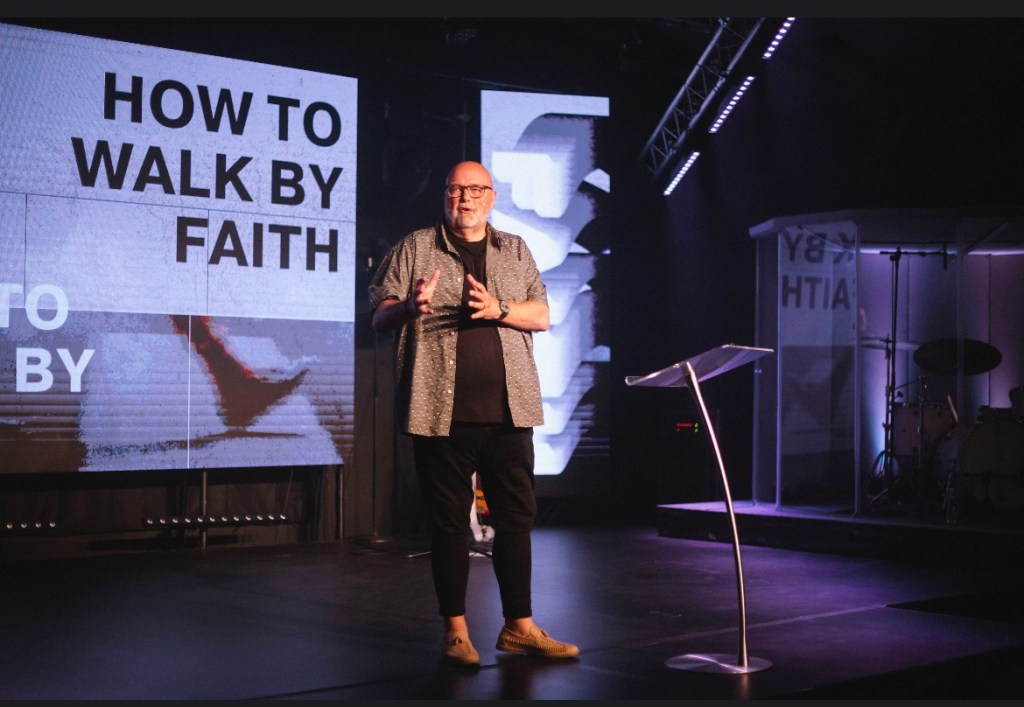
    Over the last month, I’ve enjoyed bringing three messages into the life of our church, Ikon church. I thought I’d like to share the links with you here as many of you connect with them online.

    “We walk by faith and not by sight.”
    2 Corinthians 5:7 
    “God is able to do immeasurably more than all we can ask or imagine.” Ephesians 3:20.
    “For we are his workmanship…” Ephesians 2:10
  • Remote Workers Need Small Talk

    At the beginning of this pandemic in March 2020 we decided that Our workers needed Smalltalk as well as needing remote meetings for productivity and planning.

    So we organised zoom meeting every Tuesday at 11 am for 30 minutes where we met for “a cup of tea“ The rules were simple, we don’t talk work, we just talk about what people have been doing, how they are getting along etc. We did this for many months and found help build trust and keep relationships flowing.

    We also instigated something called shout outs at the beginning of our staff and team meetings. This is 5 to 10 minutes where people on the call shout out other people on the call for something they’ve done well in the last week and the whole call then celebrates that person.

    https://youtu.be/sK263xjkaFY

    https://hbr.org/2021/03/remote-workers-need-small-talk-too

  • Why would 7 out of 10 Pastors be looking for other work
    Scott Sauls

    Scott Sauls Pastor of Christ Presbyterian Church in Nashville recently said that 7 out of 10 pastors in America are looking for other work. He mentioned this statistic was brought to him by a staff member and by recollection thought it could be from Barna or Lifeway.

    I’ve searched for the specific research for a couple of weeks but have not found that particular statistic. However, what has been very revealing is the poor state of Pastors’ mental health at this time. So I wanted to post some reasons gleaned from a number of sources as to why that might be.

    I also want to say, I am incredibly thankful for my own church and that personally I am not searching for alternative work 🙂

    1. The Pandemic has been hard for Pastors too: Obvious I know, but every concern people face in this time is faced by Pastors. They too have lost friends, family, faced illness etc. Pastors miss their routines, miss seeing people and many are uncertain as to what the future will look like.
    2. They carry the burden of the church: The Apostle Paul said, “I face daily the pressure of concern for all the churches.” 2 Corinthians 11:28 Pastors not only carry the burden of immediate family concerns but the concerns of their congregations too.
    3. Pastors feel less resilient when facing opposition: Opposition and criticism is normal for any leader but in this moment when the Church is meant to be a source of strength, faithfulness and care the usual levels of resilience are significantly weaker. Statistics also show that opposition and criticism for pastors has sharply risen during this time.
    4. Pastors feel ghosted by the majority of their congregations: Sauls said this, “Our people feel like they’re still with us because they see us and hear us from their living rooms, and yet, we just have this complete void of relationship,” Only a portion of the congregation comment, chat etc during online services and whilst numbers of views may signify the congregation is present the pastor has no way of knowing.
    5. Pastors have had to learn a variety of new skills: If like in the UK you are experiencing lockdown then the church building is more akin to a TV studio than a sanctuary for worship. The skills required for broadcasting services are very different to those required for leading services in-person.
    6. Pastors are worried about budgets: The concern of the long term effects of the pandemic on people is a concern for pastors who worry about what the people in their congregations may face. Alongside this is the worry many have as to whether their churches will meet budget.
    7. Many Pastors have had no time off: The pandemic has not produced, for most, a decreased workload but an increased one (see 5 above) and the inability to take time off is taking its toll.
    8. Pastors are discouraged because the pandemic has revealed the congregation is often discipled more by the culture than by Jesus: This has often proved the case throughout history but has been hidden somewhat, in recent times, by the prosperity and peace within western society. The last year has been a great revealer.
  • Co-Pilots

    Co-Pilot.
    Have you got one?
    Who is it?

    As a kid I loved watching Rally Drivers
    to me they were the best.
    My infatuation lead me to understand,
    their skill, though immense, was exponentially enhanced by having a great co-pilot

    Co Pilots are co-drivers
    They navigate,
    they set the pace, they anticipate what’s ahead.
    The turns, the sharpness of the bends, the camber
    and the obstacles to look out for.

    Co-drivers are also often called upon to carry out maintenance on the car during the special stages of a Rally.

    Jesus said he would send the best co-pilot for us
    He called him
    “The Spirit of Truth,”
    “Comforter, Counsellor, Advocate.”
    ”The Holy Spirit”

    And Jesus said

    He will be with you forever

    Sounds like he’d be great to have “alongside to help.”

    Be filled with the Holy Spirit
    Invite Him into your circumstance today, whatever you are facing. And…

    “You will receive power when the Holy Spirit comes on you; and you will be my witnesses in Jerusalem, and in all Judea and Samaria,and to the ends of the earth.” – Jesus, the book of Acts, chapter 1 verse 8