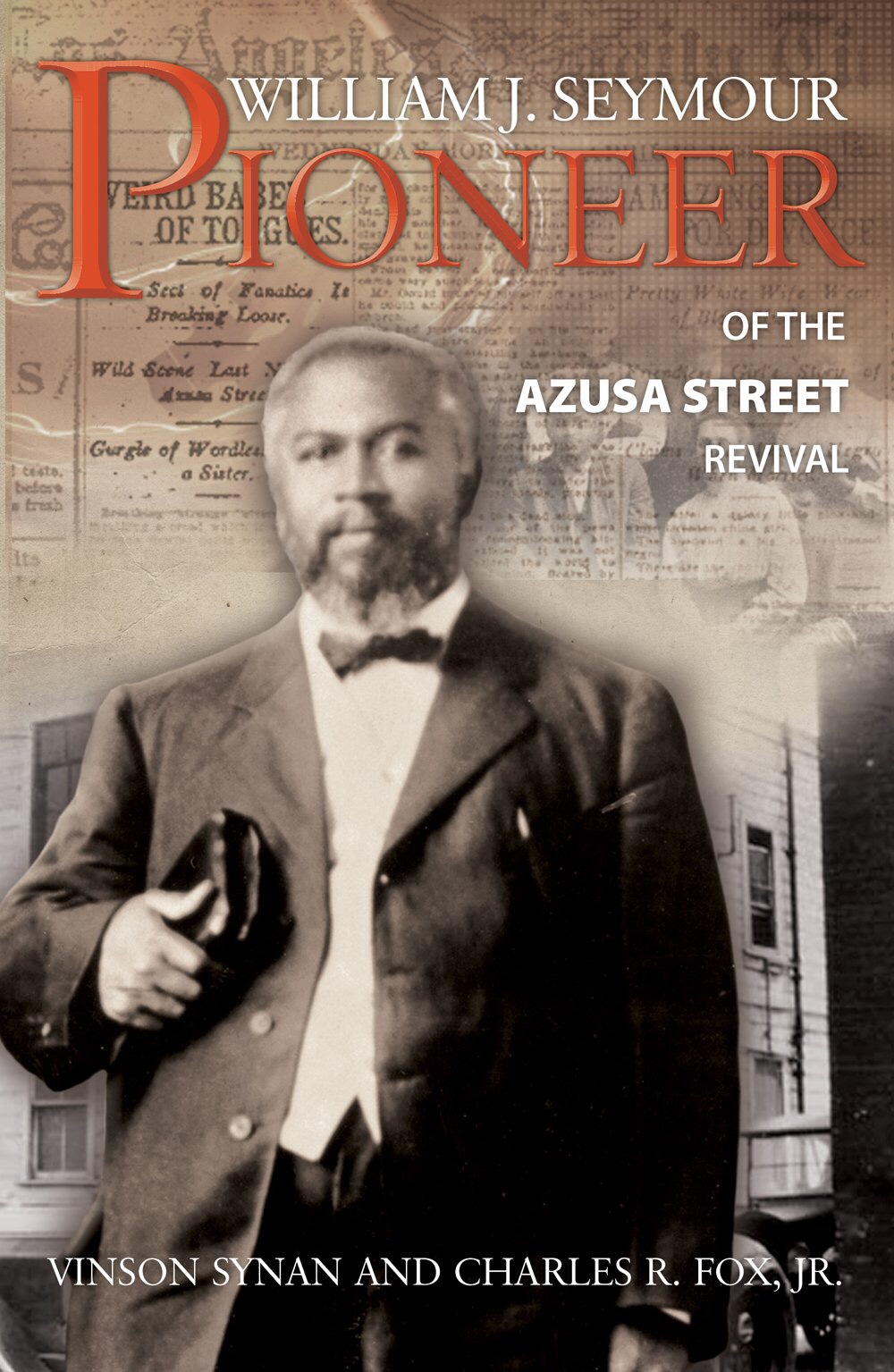
• William J Seymour – Azusa Street Revival

    This is an edited transcript of a podcast put out by Bridgetown Church in Portland Oregan, the link to the original podcast site is below.

    February is Black History Month in the United States. This is an opportunity to spend time learning about the legacy of black folks in our history as a nation and ruminating on the unique aspects of God’s kingdom that came and comes to us through our black brothers and sisters.

    I’ve been thinking a lot about a man named William J Seymour. As you know, Bridgetown we’ve been on a journey through many years of leaning into a life of abiding in the Holy Spirit, and especially with Pentecostal church history in mind William J Seymour played a very large part in that.

    Seymour was born in Louisiana, in 1870, during a time when the KKK violence made his formal education impossible. Within the first decade of his life history tells us that more than 2500 citizens of Mississippi, Alabama, Georgia and Louisiana were lynched or burned at the stake by the pseudo Christian Klansmen.

    So Seymour was mostly self educated, until he was able to finally attend to Bible school, but only kind of, he was still refused to actually attend class, but was made to sit just outside of the classroom with the door slightly ajar. Can you imagine what Seymour must have been thinking and feeling with such open animosity and disgust that surrounded him and for something outside of his control, something actually in fact that was God given and God designed. the colour of his skin.

    What compelled him to keep going? Why keep trying?
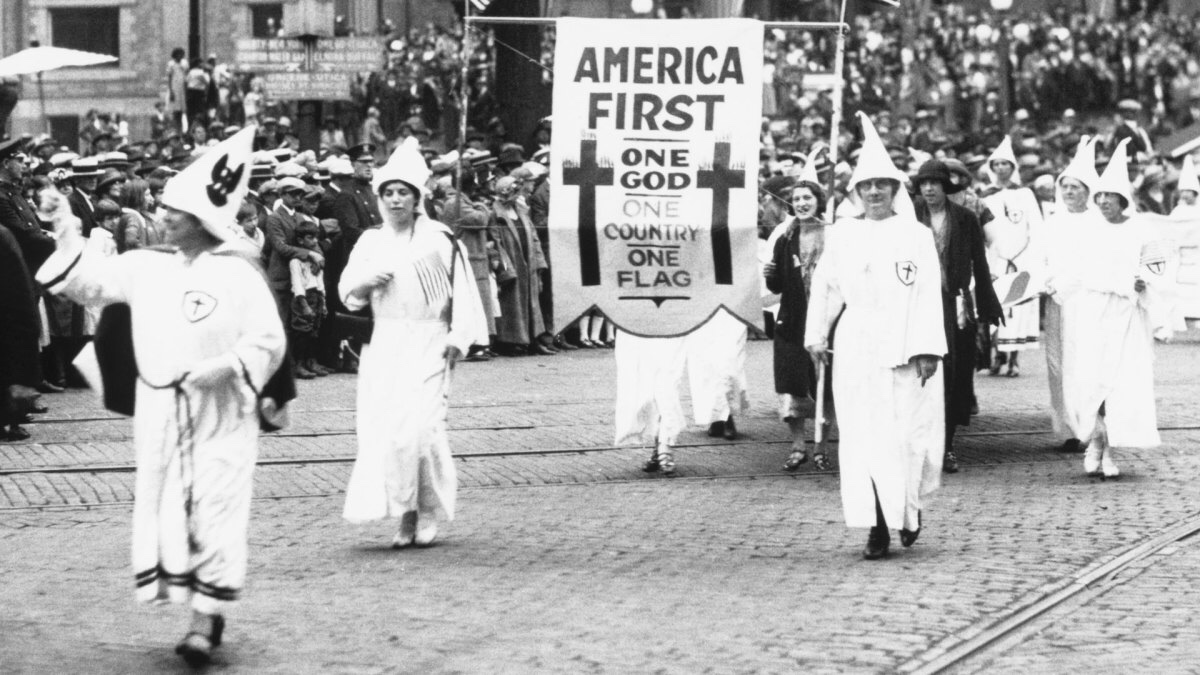
    Well, like for many of our black brothers and sisters, it certainly wasn’t the system, which wasn’t even attempting to hide its bias. The only thing I can imagine, was that Seymour knew the voice of his shepherd. He was called by someone higher, and he refused, along with the prophets and even our own Lord to bow before the powers and principalities, and instead chose to listen to the voice of his true King who shared in his sufferings, transforming them into the glory of God’s own kingdom, how much we have to learn from William Seymour’s example. (Pic is kkk March)

    After classes. Seymour would go preaching in a predominantly black part of Houston with one of his professors who was white, but his professor would not allow him to preach in the front alongside him but made him sit in the back. This Professor even went as far as segregating the altar, not allowing black and white members of the same kingdom to kneel together.

    Fast forwarding through more years of faithfulness and perseverance and racism. Seymour left Houston and began pastoring a small church in California. And on April 9 1906, something extraordinary happened. The Holy Spirit broke out in that congregation with people experiencing God’s presence in all the ways the Scripture tells us, speaking in tongues and translating them, miraculous healing, overwhelming joy and so much more.

    Over the next three days there were moments of loud worship and dancing and also times of reverence silence and stillness. These were not professional theologians the congregation was made up of cooks and railroad porters, wash women and janitors. These are some of God’s favourite kinds of people to encounter.

    Near the end of the three days the crowd began to dwindle, until only Seymour and one friend remained on their knees begging God for revival. Eventually even Seymour’s friends gave up saying it’s just not time. But Seymour, ever the man of perseverance and conviction in God’s goodness, stayed, saying,

    I am not giving up.

    And the Lord heard his prayer. Within days huge crowds of people from virtually every skin colour, nationality, and social class began filling the building, until they had to move to a new two storey warehouse at 312 Azusa Street.
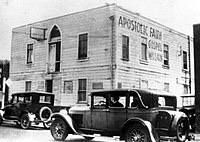
    The bottom floor was for preaching singing and dancing and at the top of the stairs, there was a sign that said, no talking above a whisper, designating the second floor for silent prayer.

    There was no choir. No offering taken, no advertising, and yet the room was packed and about 800 people filled the building, day and night and about four to 500 more were in the streets surrounding the building trying to look in and see what was happening.

    In 1906, the same year the revival started, Seymour launched a newspaper about it. People were asking questions what was happening. That newspaper grew to about 50,000 readers.

    This revival wasn’t just about gathering in the Azusa Street building. Within a few short weeks this prayer meeting started sending out missionaries to Scandinavia, India, China, Africa, Korea and many other places, each of which would experience revivals of their own.

    These meetings in that building on Azusa Street continued day and night for three years and that’s just the kind of thing the Holy Spirit does isn’t it. In the words of Richard Foster

    The miracle Seymour had been seeking had happened.

    By the power of the Spirit, a revolutionary new type of Christian community was born. One in which as a journalist who reported on this revival at the time said quote

    The colour line was washed away in the blood.

    As this revival went on though, filled with all kinds of signs and wonders Seymour realised he needed to clear something up. He wrote this quote

    Tongues, speaking in tongues are not the real evidence of the baptism of the Spirit in everyday life. If you are angry, or speak evil or backbiting, I care not how many tongues you have, you have not the baptism of the Holy Spirit. Pentecost, or being filled with the Holy Spirit, makes us love Jesus more and love our brothers more. It brings us all into one common family .

    For Seymour, as for the Apostle Paul and as for us. The primary evidence of the Holy Spirit was and his divine love.

    And so, in modelling this, and in continuing in his rigid conviction of fellowship across the colour line Seymour reached out to his old Bible school professor. Yes, the one who wouldn’t allow him to sit in the classroom and invited him to be a part of the revival. He wanted to share leadership, with a white preacher so he could Shepherd with him, what God was doing in this prayer meeting.

    Now to me this was the greatest symbol of Seymour’s character and integrity. But it was also unfortunately in this vulnerable, humble attempt at reconciliation, that the Azusa Street Revival met its end. Richard foster writes,

    Right at the moment of Seymour’s greatest influence white supremacy reared its ugly head denouncing and rejecting this grace filled work of God.

    While this professor did indeed show up at the meeting house in LA. Once inside his atrophied sickly vision of God’s kingdom could not hold what he saw. And in a self Righteous Fury he marched past the co-mingled worshippers, past this vision of God’s kingdom and revelation in chapters 21, and 22, and stepped up to the podium and shouted, “God is sick, to his stomach.”

    He proceeded to demand allegiance to the demons of segregation and racism explaining that God would not stand for what he called quote such animalism. Now when the people of the revival would not heed his words the professor rallied up a couple hundred of the worshipers and set up a rival revival in a nearby building. And I can only wonder, at what point this man thought that anything he was doing looked, anything like the way that Jesus lived and ministered.

    But wielding the social power, that was his as a white man over and against that which Seymour did not have as a black man, this professor proceeded to gut Seymour’s revival by condemning it in the strongest possible terms. And slowly, most of the white leaders in Seymour’s movement gave up worship of the true God and went after the golden calf of power.

    Even while his multicultural expression of worship became more and more severed along the colour line, Seymour never stopped preaching the unity of God’s kingdom and about how division, especially by the colour line, was antithetical to what God had in mind. One scholar has even said that Seymour resolutely refused to segregate or Jim Crow the movement, and for this reason and this reason alone Seymour was rejected and forgotten by the movement he created and in late September of, 1922 at 52, years old, william j seymour died in almost total obscurity.

    Now, while we mourn the reality of how this whole thing ended, we must remember that it was not a defeat, but a resounding victory. As we shift our metric of success we recall that Seymour was never after acclaim or power. He was after seeing God’s kingdom bring people to life in ways they never thought possible, regardless of colours, social status or prestige.

    So, while he was forgotten by the world, and we grieve that we can only imagine the reception he had as he stood before God’s throne and heard the words. “Well done, good and faithful servant.”

    In the words of Richard Foster.

    Seymour stood at the forefront of one of the most revolutionary social movements in history, a movement, intent upon erasing the colour line. This was a movement that did not just seek prophecy, but sought to prophetically embody the in breaking kingdom of God.

    Brothers and sisters, may we continue in the legacy of William Seymour who sought to break colour, gender and nationalistic barriers and fought for our paradoxical oneness and uniqueness in Christ.

    May we believe the Holy Spirit for another revival of this kind, in which we lift up the one who would draw all people to himself, and would we make much of Jesus. Trusting in his power, listening to his people looking for his kingdom and living in his presence.

    https://bridgetown.podbean.com/e/daily-william-j-seymour/

  • MY FEAR OF DOGMA

    Have you noticed how dogmatic everyone is these days
    Dogmatic about everything
    Opinionated beyond measure
    ”I’m right, you’re wrong.” Settled.
    We live in the world of division

    Then there’s the world of feelings
    ’If you feel guilt, it’s wrong.”
    But what if guilt is the appropriate response and the path to freedom
    ”If you’re feeling pressure, reject it, its wrong.”
    Diamonds are made under pressure

    Then we love a bit of name calling
    We salivate at our tribal banners

    But “There is no longer Jew or Gentile, slave or free, male and female. For you are all one in Christ Jesus.” (The apostle paul, the letter to the galatians chapter 3)

    I know, I know
    You’re right and you know you are
    Sorry

    There is one bit of dogma I truly love though
    One dogmatic thing I am fully convinced of and fully committed to

    Jesus Christ is
    the way
    the truth
    the life

  • Is This The End of The World As We Know It?

    I recently listened to a podcast during which the presenters answered some listener questions – one of the questions that came in was this. “Are we experiencing the end of the world? “

    The listener who asked the question was thinking about Covid, lockdowns, all the problems related to health, loneliness, addiction, isolation, the economy etc. – are these signs that the end of the world is happening?

    The people on the podcast responded like this they said “No, this is not the end of the world, but it could be the end of the world as we know it.”

    It got me thinking, it got me thinking about our obsession with the end of the world and our desire to know what’s going to happen in the future. It got me wondering why so many Christians are obsessed with this topic. I mean, when I became a follower of Jesus over 40 years ago we talked about this a lot – in fact we had a whole weeks of bible studies on the end of the world. Specialist teachers would be invited into our church to come and take a series of talks of four or five days – my own pastor who is a great bible teacher would do major talk – some major series on this subject, (Maybe you experienced that too )

    In one respect it’s not surprising because Jesus said a fair few things about the end of the world. 

    What if I said that the ministry of Jesus was such a contrast to what people thought about the way everything worked that people heard it like this – “It’s the end of the world as we know it.”

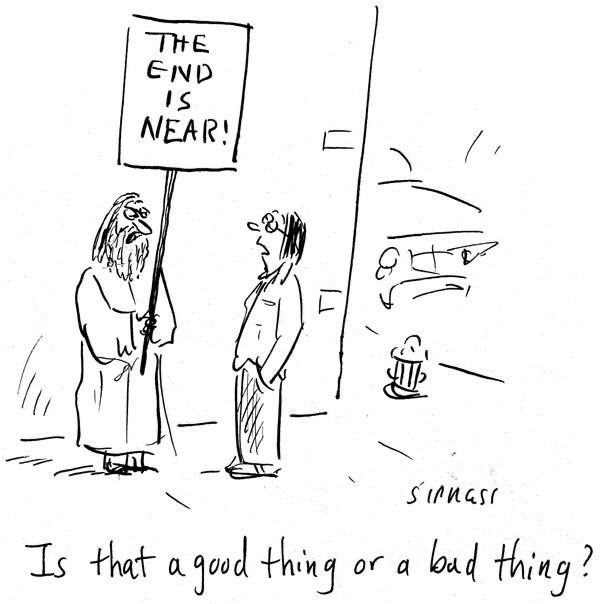
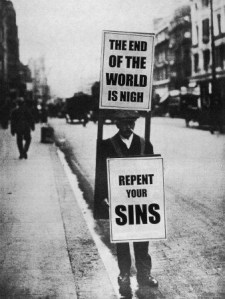
    I can also remember Christians with placards saying. “The end is nigh.”and often their accompanying message was one of judgement and criticism, their goal was to instill fear, maybe to shock people into believing in Jesus… now Jesus certainly didn’t come with that spirit

    But if you were Herod, a Jewish King in league with the Romans you were afraid of a new King being born, and if you were Pilot a Roman governor you were afraid of messiahs and you would ultimately arrest and then crucify these rebels. And if you were Caiaphas, the Jewish high priest, or indeed a Pharisee or Sadducee, members of Jewish religious sects… Jesus was not on your Christmas card list and in fact you would strangely join together and in the end encourage Pilot to crucify him.

    Why?

    Because everything Jesus did was a message

    A message to Pilot – your world is coming to an end

    A message to Herod – your world is coming to an end

    A message to Caiaphas and the religious leaders – your world is about to end

    In a recent message I looked at how Jesus announces that the Kingdom of God is here, how it is among you, it is at hand… the kingdom of God is within you he says… and the power in that message is the realisation that everything else is temporary, that everything else that you trust in will fail, that everything else… Empire, Authority, Religion – they’ve all had their day… There’s a new King and his name is Jesus.

    And Jesus mission, his purpose, was to get his followers to see this and to switch their allegiance, to switch their faith… from Empire, from Governments, from Religion, from money and wealth and to place their whole trust in a relationship with him… after all there’s no point trusting in something that will fail, something that is temporary.

  • I was intrigued by this article about how China has chosen to invest in future technology during this COVID season, whereas many western economies have held back on investment at the same time.

    Find article here

    Communication speed is a key to growth and China seems to be prioritising that on a large scale between cities as well as individuals.

    When it comes to tech there’s no doubt they are taking huge strides.

  • No More of this

    This week an evangelical pastor in America, a very well known one suggested that Christians should arm themselves and be willing to engage in civil war. Ridiculous right?

    Maybe not unless you’re clear on your view of Jesus and non-violence, or if you use Old Testament Scriptures to justify, well, just about anything.

    So I ask you. Please read the article by Brian Zahnd from 2018. Who explains one of the passages used by the pastor to encourage readiness for civil war and taking up arms.

    It’s called no more of this and you can find it here.

  • Self talk

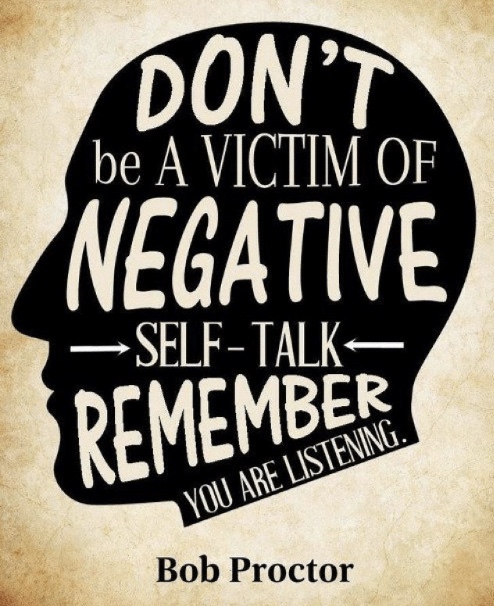
    The inner voice

    That’s the real me

    The things I say to my self that’s the real me

    The spin I put on my words to be accepted by you that’s not the real me but the things I think in my heart that’s the real me

    Freedom comes when the gap between what I say to me and what I say to you is minimal

    From the heart the mouth speaks – Jesus

    Matthew 12:34

    Acknowledge the inner voice

    Change the narrative and you change your life

    Pay attention to the polarity of your mind. don’t let a negatives live where positives belong.

  • Normal wasn’t working. Normal was a crisis

    In the midst of a pandemic everyone wants to go back to normal and indeed, when it comes to practices, so do I. I want to travel, attend sporting events, I want to not wear a mask and I want to sing in church, despite not being able to hit a note.

    But we should also consider that normal, not the practices but the state of normal wasn’t the best and actually although I’m grateful and thankful for so much of what we experience I believe there is better.

    Here’s a few reasons why normal wasn’t working:

    • Anxiety and Depression rates were rising, especially amongst teenagers
    • Free Speech is being threatened constantly. Having an opinion different to someone else’s is now the cardinal sin.
    • Cancel culture is growing. People are losing their jobs because of an opinion, sometimes a scientifically proven opinion.
    • Emotions rule scientific fact and enquiry.
    • Governments lie and are never held to account. Take WMD and the lies told about COVID-19. Government should serve the people and not self-interest or political agenda. The economic decisions made throughout this pandemic will have disproportionately adverse effects on whom? The poor, the marginalised and the weakest.
    • Racism is still very much alive and well on planet earth, even within our most ‘progressive’ societies.
    • We don’t think about our planet enough.
    • There’s too much them and us and not enough we.
    • We don’t admit the mistakes and failures of history. (We can do that, by the way, without forgetting or totally demonising our history).
    • We’ve turned following Jesus into a political allegiance.
    • We are ruled by fear.
    • We still think power is for crushing others. It’s called, ‘empire’.
    • We struggle to love ourselves, much less our neighbour as ourselves.
    • The voices calling for change want to burn the house down.

    We desperately need something new…

    Something true

    Something honest

    Something just

    Something pure

    Something lovely

    Something of good report

    Something praiseworthy (Philippians 4:8)

    CAN YOU THINK OF ANYTHING LIKE THAT?

    That is what we need.

    CAN YOU THINK OF ANYONE LIKE THAT?

    That is who we need

    Selah

    There is an answer…

    The Church must Lead the Way

    Jesus idea of the Kingdom of God amongst us needs to take hold like never before.

    If Jesus were you how would he live?

    Jesus: “I have come that you might have life and life to the full” John 10:10
  • You Are Not Afraid of Failure, You’re Afraid of Criticism

    I remember reading this quote from Seth Godin’s excellent book called Tribes

    What people are afraid of isn’t failure. It’s blame. Criticism.

    To be a leader in any sphere of life and work you will create a tribe, a group of followers and to lead well you are going to need to overcome your fear of criticism.

    No one likes criticism, no one wants it but if you are to lead anything criticism will come.

    So how do you overcome your fear of criticism? C69DEE02-4EE5-41E4-98E2-55E3058BD814Great Question?

    Perhaps this quote I heard some years ago will help.

    You measure your ministry in the people who are with you – Gerald Coates

    Seth Godin in his book would say it like this.

    Great Leaders focus on the Tribe and only on the Tribe

    In Other words – there’s a group of people who are with you and who are for you.

    They want your success.

    You matter to them.

    They like you and they like your work.

    Listen to them, their opinion matters.

    So 1. Focus on your Tribe and 2. Focus on your Dream

    Seth again:

    Part of leadership (a big part of it, actually) is the ability to stick with the dream for a long time. Long enough that the critics realize that you’re going to get there one way or another… so they follow.

    …or they move on

    Keep going, believe in what you do, believe it everyday

    Turns out it’s a great strategy.

  • Atmosphere – the top 5 things that will shape the atmosphere around your life today

    Yesterday I spoke a message entitled God is my source and in it I spoke about the atmosphere of your life and the need to be able to shift an atmosphere on Mondays as well as Sundays. So many people tell me how worshipping together in Church helps them and changes their thinking, their spirit and attitudes. So today here are the top 5 things that will change and shape the atmosphere around your life today.

    1. LANGUAGE: What you say and what you don’t say. Are you talking scarcity or abundance, are you talking faith or fear? Are you talking about opportunities or obligations, are you speaking about maximums or minimums? What do you say about yourself, remember you have naming rights.
    2. BELIEFS: Beliefs drive behaviours, so what are your convictions? Beliefs also shape character. Who do you believe you are, who do you believe God is? What is the right way to act? You probably have a belief about that if you think about it.
    3. ACTIONS: What patterns of behaviour will you follow today, positive ones or negative ones. What will you accomplish today? Even a small thing will shift the atmosphere around your life. Keep moving forward, keep moving things forward. Be kind, compassionate, send that message/gift, do it today.
    4. CELEBRATIONS: What will you celebrate today? Who will you celebrate today? It’s so easy in our culture to criticise and mainly we only do that because we feel bad about ourselves. Celebrate something or someone today. Tell someone you are thankful for them, that you admire ________ about them, tell that they make a difference in your life.
    5. VOICES: Who and what will you listen too? The biggest killer of peace, joy and happiness is the voices we listen too. I recently read these verses in some ancient wisdom; the book of Psalms chapter 38 verses 11-14 here’s a snippet.

    Those who seek my hurt speak of destruction… But I, like a deaf man do not hear.

    What will you be deaf to today, what voice will you allow and what voice will you reject. You are the keeper of the key…


  • Small Things

  • Do not despise the day of small beginnings – Zechariah 4:10
  • Don’t aim to be the biggest aim to go the longest
  • Don’t strive for fame rather keep bringing your best
  • Give your all to the small
  • Sometimes what’s missing is YOU
  • People don’t follow principles people follow people so be the best version of you possible
  • Big doors swing on small hinges
  • Never underestimate the power of a step
  • Tweak it
  • Keep moving forward
  • If you are faithful in little things, you will be faithful in large ones – Jesus, Luke 16:10
  • Don’t put it off
  • Take care of the little things, sweat the small stuff
  • Tidy your room (office, garden, whatever)
  • Listen and look for people who built something, they sweated they small stuff
  • An inheritance obtained too early in life is not a blessing in the end – Proverbs 20:21, build something
  • Build yourself, build your marriage, build your family, build your church – it all happens through incremental steps
  • Save a little money, do it often
  • Speak well and avoid negative people, small thing, big results
  • Encourage someone
  • Today matters
  • You matter