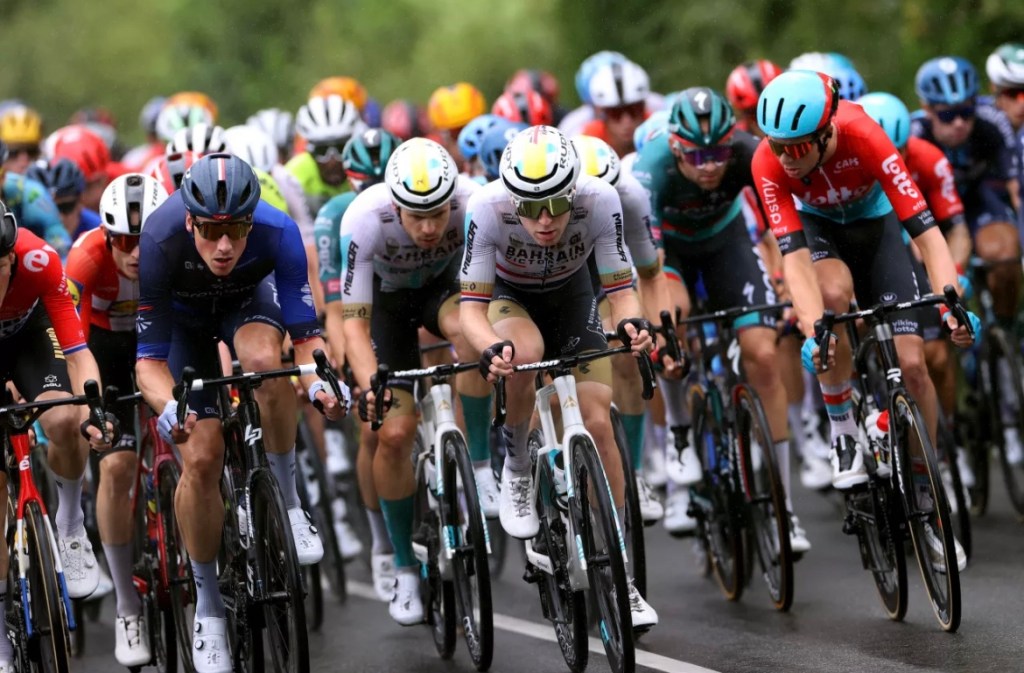
Apostolic teams today
Open almost any letter the Apostle Paul wrote and you’ll notice something immediately: he rarely writes alone.
“Paul, an apostle of Christ Jesus by the will of God, and Timothy our brother” — that’s how 2 Corinthians begins. Philippians opens the same way. So do Colossians, 1 and 2 Thessalonians, and Philemon. In the Thessalonian letters, Silvanus (Silas) appears alongside Timothy. Paul’s apostolic ministry was fundamentally a team project.
This matters more than we might think. Because in recent years, the concept of “apostolic teams” has been adopted, adapted, and at times distorted in ways that bear little resemblance to the New Testament pattern. If we’re going to recover genuine apostolic ministry, we need to go back to what Paul actually modelled — and what the best scholarship reveals about how the early church really worked.
The Problem with Modern “Apostolic Teams”
Let’s name what’s gone wrong. In some streams of the church, “apostolic team” has become code for a single dominant leader surrounded by loyal lieutenants. The “apostle” speaks; the team applauds. Authority flows one way — downward — and the diversity of gifts Paul fought to protect gets flattened into a hierarchy of prominence.
This isn’t apostolic. It’s autocratic with a spiritual veneer.
Other versions are subtler but equally problematic. Teams built around a single gift cluster — all preachers, all strategists — where everyone thinks the same way and nobody provides the corrective balance that genuine diversity brings. Or teams where gifts like mercy, helps, and administration are treated as support acts for the “real” ministry happening on the platform.
Gordon Fee puts his finger on the issue when he writes that God “is not simply saving diverse individuals and preparing them for heaven; rather He is creating a people for His name, among whom God can dwell and who in their life together will reproduce God’s life and character.” The apostolic team isn’t a CEO and his executive board. It’s a community that embodies the diverse character of God.
What Paul Actually Modelled
When Paul names Timothy in the greeting of 2 Corinthians, he’s not being polite. He’s making a theological statement. Timothy wasn’t a secretary or a silent partner. He was someone the Corinthians knew personally — he’d been there with Paul (Acts 18:5) — and his presence signalled shared responsibility, shared authority, and shared pastoral investment.
N.T. Wright captures this when he describes Paul’s vision of the church as a community where every member’s contribution matters because together they embody the new creation God is bringing about in Christ. The apostolic team is a microcosm of that vision — not one voice amplified, but many gifts woven together.
Look at Antioch in Acts 13. The leadership was astonishingly diverse: Barnabas, Simeon called Niger, Lucius of Cyrene, Manaen (raised alongside Herod), and Saul. Different backgrounds, cultures, and stories. From that diverse community — worshipping and fasting together — the Holy Spirit said, “Set apart for me Barnabas and Saul.” The first missionary journey launched not from a single leader’s vision but from a diverse team’s shared discernment.
James Dunn, in his landmark work on Paul’s theology, emphasises that the Spirit distributes gifts across the whole body precisely to prevent any single person or gift from dominating. For Paul, charisma is thoroughly communal — the gifts exist for the building up of the body, and the body requires every part. The moment one gift monopolises the team, the body becomes deformed.
Why Diversity of Gifts Isn’t Optional
In my book Empowered, I explore how churches often lean into one or two streams of gifts. Some become “word churches” — strong on teaching but lacking in supernatural power. Others become “power churches” — dramatic manifestations but weak on discipleship. Still others become “love churches” — excelling in compassion but lacking prophetic edge.
The same pattern shows up in apostolic teams. When a team is built around a single gift cluster, it reproduces its own image rather than the fullness of Christ. The New Testament vision is all three working together — word, power, and love — so the world gets a complete picture of Jesus.
Paul makes this explicit in 1 Corinthians 12: “The eye cannot say to the hand, ‘I don’t need you!’ And the head cannot say to the feet, ‘I don’t need you!’” (v.21). In fact, Paul goes further — those parts of the body that seem weaker are indispensable, and the parts we consider less honourable deserve special honour (vv.22–24).
Fee, in God’s Empowering Presence, argues that this isn’t merely organisational wisdom — it’s pneumatology. The Spirit intentionally distributes different gifts to different people because the diverse body is the Spirit’s chosen vehicle for manifesting Christ’s presence. A team where everyone thinks alike and operates in the same gift isn’t Spirit-led; it’s self-selected.
This has radical implications. The administrator on the team isn’t less “apostolic” than the preacher. The person with mercy shapes the team’s character as much as the prophet shapes its direction. Hospitality, helps, and giving aren’t the support crew — they’re the connective tissue that holds everything together.
Recovering the Pattern
So what does a genuinely apostolic team look like? Here’s what I think Scripture and the best scholarship point us towards.
First, apostolic teams are gift-diverse by design, not by accident. Paul intentionally built teams that reflected the full range of the Spirit’s gifting — Timothy’s pastoral sensitivity, Titus’s organisational strength, Priscilla and Aquila’s teaching depth and relational warmth. The team wasn’t built around Paul’s gift — it was built around the mission’s needs.
Second, apostolic teams share authority rather than merely delegating tasks. When Paul names Timothy in his letter greetings, he’s giving the church multiple points of leadership contact — a network of accountability, not a lone apostle issuing commands from a distance. Timothy endorsed the letter publicly, carried it physically, and helped interpret it. That’s shared apostolic witness.
Third, apostolic teams are accountable to the churches they serve. The Antioch church sent Paul and Barnabas; they reported back (Acts 14:26–27). Wright highlights how Paul’s authority was always exercised within relationship — never as a freestanding power but always as a servant of the gospel.
Fourth, apostolic teams exist to equip and empower, not to centralise and control. Ephesians 4:11–12 makes this crystal clear: apostles, prophets, evangelists, pastors, and teachers exist “to equip his people for works of service, so that the body of Christ may be built up.” The goal is always the empowerment of the whole body, never the elevation of the team.
Why this matters (theologically and pastorally)
What’s beautiful here is this:
The apostolic mission wasn’t: one genius apostle doing everything It was:
- Prophets
- Teachers
- Admistrators
- Theologians
- Communicators
- Letter carriers
- Financiers
The early church ran on Spirit-empowered team ministry.
A Word for Today
Here’s the prophetic edge. We live in a church culture that has too often celebrated lone-ranger leadership — one preacher, one influencer, one “voice.” In some circles, the apostolic team concept has simply replaced the solo leader with a small inner circle that functions the same way.
But Paul’s model challenges all of this. His practice was team-based ministry with shared accountability, shared visibility, and shared investment across the full diversity of the Spirit’s gifts. He didn’t just write letters — he deployed teammates, shared authority, and multiplied disciples.
As I write in Empowered, the Spirit distributes gifts “to each one, just as he determines” (1 Corinthians 12:11). Any model of apostolic leadership that narrows the team to a single gift, a single voice, or a single personality isn’t just inefficient — it’s working against the grain of what the Spirit is doing.
The future of apostolic ministry isn’t louder leaders with bigger platforms. It’s diverse teams, rooted in community, exercising the full range of the Spirit’s gifts for the building up of the whole body.
That’s a word worth recovering. And a team worth building.
Discover more from Paul Benger
Subscribe to get the latest posts sent to your email.
 Paul Benger