• Saving Starbucks

    Here’s a link to the 2007 leaked email. The commoditisation of Starbucks.

    The woman in the grey sweatshirt stood up in front of roughly 100 others at Borders Books’ Chicago State St. location and tearfully told Howard Schultz, CEO of Starbucks, that she’d closed her store and driven all night from her store in Ohio to see him speak in person. “It’s an honor and a privilege to be in front of you today,” she said, her voice breaking with emotion.

    She, like many others, were at Borders to see a Q&A discussion between Schultz and CBS2’s Bill Kurtis on Schultz’s new leadership memoir, Onward: How Starbucks Fought for Its Life Without Losing Its Soul (and perhaps get a book signed or a photo taken with the man who has changed the way many people think about coffee). After the woman thanked Schultz for all that he’d done for her and her employees, Kurtis asked her why it was that she drove so far to see him – why Schultz? “He’s an inspiration, and he’s honest,” she replied, as if it was the most obvious answer in the world.

    It’s hard to argue with the fact that Schultz and the Starbucks brand have a die-hard following – think of this woman who traveled all night from the state of Ohio to see Schultz and express her gratitude and devotion to Schultz and Starbucks in such a personal way, Here was the power of the Starbucks brand in action. Here was a company that, more than most any others, had built up nearly impenetrable company and employment brands, gained a legion of loyal fans, customers and employees, and grown to a massive 16,000-store, “there’s a Starbucks on nearly every corner” giant. But, as Schultz would point out, things weren’t so rosy just a few years earlier.

    FLASHBACK TO 2007

    “I could sense, or small, that something wasn’t quite right,” Schultz said as he addressed the overflowing crowd of fans and curious onlookers before him. He was referring to February 2007, a time when, he said, he became concerned about what was happening at Starbucks – or rather, what wasn’t happening. Little by little, Starbucks had been losing some of the signature traits it had been founded on.

    In 2000, Schultz had stepped down as CEO (or, as a Starbucks employee would write it, “ceo”– they have used lowercase job titles since their early days) and became chairman, moving away from day-to-day operations to focus on global strategy and expansion. In the years that followed, store growth accelerated and stock prices soared as sales and profits increased every single quarter – until they suddenly didn’t. By 2007, things were taking a turn for the worse. “Starbucks had begun to fail itself,” Schultz said.

    BITTER TIMES

    Over time, the company had been expanding the brand beyond its core into various media like music, books, and film. In addition, every quarter, there was more intense pressure to maintain annual revenue and profit increases of at least 20 percent – an ambitious goal that Schultz admits he was complicit in promoting. Amidst battle cries of “More growth!” the team had lost sight of what the Starbucks experience was really all about. Starbucks, he pointed out in his book, has always been about so much more than coffee. “But without great coffee,” he wrote, “we have no reason to exist.”

    So, on Valentine’s Day 2007, Schultz sent an email to Jim Donald, the CEO of Starbucks at that time, warning of the commoditisation of Starbucks, hoping to unleash an honest conversation that would prompt everyone to reexamine the path they were traveling. He stressed a need to get back to Starbucks’ core and make the changes necessary to evoke “ the tradition, heritage and passion they all had for the true Starbucks experience.” Unfortunately, he said, the email leaked, and the next thing he knew it was all over the Internet – and the public was in a furor. Starbucks – and Schultz himself — received a lot of criticism for his opinions, even from Starbucks’ own employees, and as he says, it undermined what he was trying to accomplish.

    Online conversations took on a life of their own, and while the company was struggling to figure out how to create balance between growth and a need to preserve what the company was really about, Schultz realised that they could no longer use their stores and website to communicate and control the conversations – the public was really in control of what was being said.  Coincidentally, soon before Schultz’s email went out, three big communication changes had occurred: a week earlier, Apple had introduced the iPhone; four months earlier, Google had bought YouTube; and five months earlier, Facebook had opened up to the public.

    Times were changing, and Starbucks was forced to either change with them or get left behind.

    BACK TO THE GRIND(S)?

    Toward the end of 2007, as the situation reached a breaking point, the board decided Schultz needed to return as CEO. So, in January 2008, he did. It wasn’t his original intention, and it wasn’t an easy decision. In addition to having to tell Donald he was taking over, he was re-immersing himself in a company that was increasingly becoming viewed as one of the poster children of the recession (i.e. “save money, don’t drink at Starbucks”); people were being encouraged to look elsewhere for coffee easier on the pocket.

    As he jumped back into his role as CEO, Schultz said, he realised that the issues he’d brought up in that now-infamous email back in 2007 were even larger and deeper than he had then thought. This was through no fault of people working there, he said — it was due to the fact that Starbucks was rewarding the wrong things. Factors like speed of service were praised, rather than keeping focus on the customer and the quality of the product.

    SCHULTZ’S REACTION?

    On February 23, 2008, “I closed every store to retrain 115,000 people – I said we were going back to the roots of the company.” Of course, the media frenzy that ensued from this decision brought many to believe that the end of Starbucks was near – that they were no longer relevant. Schultz admits it was a bold decision to retrain every single employee. His explanation? “It was honest, it was authentic, and it was necessary.” The company lost $6 million that day. And as he said, Starbucks still had a long, long way to go in solving their mounting problems – but this was a start.

    Starting over, he said, involved metaphorically asking the question of employees, What does it mean not to be a bystander? “From this point, we had to create, attract and create new customers.” Gone, he says, was the time that Starbucks could do no wrong — that the company was on a “magic carpet ride” – and that profitability and likeability would happen automatically with every move the company made. Gone was the time that Starbucks was leading the conversation — now, they had to find a way to take part in the larger conversations that were happening.

    Later in 2008, one month after Wall Street’s meltdown and a few weeks before Starbucks would announce significantly reduced profits for the fourth quarter, Schultz decided to get all of the store managers together — all 11,000 of them — for a leadership conference. They’d always done the conference in Seattle, and even though nearly every major city wanted to host them, Schultz said they chose a place very much in need of assistance: New Orleans. Despite the odds, Schultz knew it had to be done, to start rebuilding trust between Starbucks and its employees and invest in Starbucks’ continuing transformation — and New Orleans was the right place to do it.  Not only did they have a week-long meeting with interactive galleries, roundtables, and panels, but they also did service in the 9th Ward and helped to rebuild some of the city’s most devastated neighborhoods.

    “I’ve always loved this company,” Schultz said in Onward. “Love is why I had some back as ceo and why I feel so personally responsible for its failure and success. Yet somewhere along our journey, the love our people had for Starbucks had blurred. New Orleans had brought it back into focus, and once again our values stood in stark relief… because of everything we experienced in New Orleans, it was apparent to all of us what it meant to love something — and the responsibility that goes with it.”

    Moving forward

    What’s happened since Schultz and the Starbucks team took major risks to turn the Starbucks experience around? Well, instant coffee (Via), for one. And Starbucks’ performance in the Q3 of fiscal 2009 marked its first earnings growth since Q1 2008 — the company earned $152 million, compared to its loss of nearly $7 million just a year earlier. As Schultz remarked in Onward, “for the first time in a long time, I felt as if we were winning.”

    In July 2009, after riding out the December 2008 choice to make 401(k) retirement plans discretionary instead of automatic in light of a weak economy, Starbucks was again able to match the 401(k) contributions of eligible employees, which, to Schultz, “would not make headlines or mean much to shareholders, but for me… was as important as anything we were able to accomplish all year.”

    In fiscal 2010, Starbucks revenues increased to a record $10.7 billion, and its operating income increased to $1.4 billion, up from $562 million in fiscal 2009. What’s next for Starbucks is anyone’s guess, but as Schultz says that every company must push for self-renewal and reinvention, constantly pushing the status quo, it appears he will continue to do just that.


    Q&A WITH HOWARD SCHULTZ & BILL KURTIS

    After Schultz gave his initial thoughts on Starbucks’ journey over the past few years, Schultz sat down with Kurtis to answer some questions about what the Starbucks brand really means, his ideal employee, and more.

    Q:  How do you define success to your employees?

    A: “’Howard Schultz is not going to serve any customers — it’s you,’ is what I tell employees.” Schultz tells store managers they are responsible for what takes place in their stores, and that “The essence of what they do every day is the difference between success and failure.”

    The greatest reason for the enduring relationship Starbucks has with its people and its customers is due to the values of the company, Schultz said. “We’re not perfect; we’ve made mistakes, and we’ll make some more.” “The last 12 months has been the most successful in Starbucks’ history,” Schultz said. “However, we did not leave people behind.” Part of that decision not to leave employees behind while striving to be financially successful involved keeping 401(k), cash bonuses, and benefits. Starbucks was, after all, the first U.S. company to offer both comprehensive health care coverage as well as stock options to part-time workers.

    Which leads us into another question…

    Q: Why are you not willing to cut the price of coffee?

    A: “We will never – and I mean never – turn our backs on our employees,” Schultz replied.  The company wasn’t willing, he added, to get cheaper coffee or cut health care benefits for each of Starbucks’ employees to cut coffee prices. The premium price is tied into having the best quality beans and treating their employees well.

    ——————————–

    Q: What will be the future role of businesses on a macro level?

    A: As social services continue to lessen in government, Schultz said businesses will have to do more to provide a safety net for people, as well as provide a safety net for people to serve their communities. Social requirements of the business world are changing, and people expect more from the businesses they patronize. People have become more cost conscious, environmentally aware, health-minded and ethically driven — and are holding businesses to higher standards. Seismic changes with social and digital media, he added, are changing the way businesses must communicate with their customers; people are making buying decisions based on companies they trust and those that align with their values.

    ——————————–

    Q: What is the Starbucks brand?

    A: Schultz admitted this was a tough question to answer, as the brand really means so many different things. Instead of spitting out a textbook definition, Schultz said he wanted to explain by telling the story of Courtney, an employee in the Queen Anne, WA store. The story goes like this: Schultz walked into a Seattle store one day, and an employee there told him he was in the wrong place, and that he really needed to get to the Queen Anne store as soon as possible. When Schultz asked him why, the employee said, “You’ll know why when you get there.”

    So, Schultz got in his car and drove to the Queen Anne store – a store where a long-time employee with special needs and past behavioral issues, Courtney, worked. When he walked in, customers were laughing and chatting, and he noticed that they had thrown a birthday party for Courtney. Schultz says this was such a testament for him as to the emotional relationship between the staff and customers at Starbucks. “You can’t invent or describe it,” he said –“you just know it’s real.”

    Starbucks, he added, is defined by those who wear the green apron and what they stand for.” In corporate America, there’s been such a fracturing of trust; for whatever reason, there’s a lot of cynicism and unwillingness to believe.” Consequently, people are hungry to work for a company that’s larger than themselves, he said, a company in which they can find their unique place. Many people go from job to job with bad experiences, becoming increasingly cynical, and when they start working at Starbucks, expect the experience to be the same and are in disbelief that it’s actually different – that the employees and the experience is actually for real.

    ——————————–

    Q: Who is your ideal employee?

    A: “We want people to join Starbucks who have like-minded values. We need happy people – we’re a people company that serves coffee, not the other way around,” Schultz said. He added that while Starbucks is creating organic, fair trade coffee, people come into the store for a different reason. “The human, emotional experience our people create is why customers come in – it’s more than just for a cup of coffee.”

    ——————————–

    Q: What leadership qualities do you look for?

    A: Again, Schultz stressed that like-minded values are key. He said that when he returned as CEO, he had 11 direct reports, and he asked them all the same question: “If you don’t believe we can do this, or you don’t believe in me, this isn’t going to work – we’re going to have to have a private conversation.” In the next six months, he said, nine of the 11 people left the company. He needed people who believed in the dream; who believed in the business – and that candor left him with those who did.

    Schultz said that as far as employee qualities, it’s important to have:

    • People who trust one another
    • Those who leave their egos at the door.
    • Those who understand that success needs to be shared.

    And to not have: People who do a great job of managing up but not managing down.

    ——————————–

    Q: What is Starbucks’ biggest win in the last couple of years since you came back on board?

    “Instant coffee,” Schultz said without hesitation. Why? “Because we were able to bring quality to instant. Great companies and entrepreneurs have to continue to push for innovation. People thought when we added instant coffee, it was the beginning of the end. But really, we did it to prove to themselves that they could replicate the taste of brewed coffee – and we did.”

    ——————————–

    Q: What advice would you give to someone who wants to take a leap of faith to pursue his or her dream?

    A: In addition to getting a mentor, Schultz advised, “Dream big, then dream bigger. You have to put yourself in a position to win, and surround yourself with people who’ve done it before — with those with experience and the skill set to complement you.”

  • 6 Things A Leader Mustn’t Lose

    I was looking back at some notes and found these thoughts that I had been asked to prepare as a back up for a Ground Level (our network of churches) leaders meeting. I didn’t get to use them that day so I thought we could enjoy them here

    Romans 12:6-8

    “We have different gifts, according to the grace given to each of us. If your gift is prophesying, then prophesy in accordance with your faith; if it is serving, then serve; if it is teaching, then teach; if it is to encourage, then give encouragement; if it is giving, then give generously; if it is to lead, do it diligently; if it is to show mercy, do it cheerfully.”

    Exodus 40:33-34

    And so Moses finished the work. Then the glory covered the tent…

    I love this verse about Moses. It shows us that there’s God’s work happening but it also shows us that there’s our work that is happening and that God is willing to partner and participate with us. That God is willing and wanted for us to participate and partner with him in his work.

    One of the ways we can do that is by stewarding well the following 10 things, making sure that they are never lost to us.

    1. NERVE:

    A leader mustn’t lose their nerve. Even when it seems that you are moving slowly or in the wrong direction. Even when you are not sure about the destination…just keep going, keep your nerve, stay patient, don’t jettison this moment. Remember, success is doing the right thing for long enough.

    2. THE ATMOSPHERE

    The environment that you create is vital to growth and life. Make sure that there’s some buzz around within your world. Don’t let the atmosphere around your life and your work be controlled by other forces, especially if those forces are negative and toxic. Take responsibility and take control of the atmosphere.

    A leader mustn’t lose the atmosphere.

    3. PASSION

    Do what you have to do to keep your passion high for what you do. Learn how to replenish. Learn how your unique personality responds to life and situations and don’t apologise for what you need to do in order to keep your passion high.

    A leader cannot lose their passion.

    4. SENSE OF FUN

    I am amazed at how young people can go from wild activity (like tribal wars) to worship so quickly. I know at one point I would of questioned the authenticity of their worship, but not any more. Ps 100:2 says,

    Serve (Worship) the Lord with gladness

    Whatever our field of work we need to keep our fun side alive.

    “The number one premise of business is that it need not be boring or dull. It ought to be fun. If it’s not fun, you’re wasting your life.” – Tom Peters

    5. COURAGE

    Leading requires courage, we all know that. Not everything is settled as you step forward, not everyone will agree. Be strong and very courageous. Michael Jordan’s quote sums this up.

    I’ve missed more than 9000 shots in my career. I’ve lost almost 300 games. 26 times, I’ve been trusted to take the game winning shot and missed. I’ve failed over and over and over again in my life. And that is why I succeed. – Michael Jordan

    A leader cannot lose courage.

    6. RHYTHM

    Rhythms possess more power than encounter. The reason that I say this is because it is our habits that form our deepest loves. It is highly likely that our Rhythms have contributed more to the people that we are today than anything else.

    A leader must find and keep their rhythm, their groove. An encounter (one-time dramatic experience) may well change the rhythm of our life but undoubtedly it is the rhythm itself that holds sway. What is your rhythm? What are the things that you do that make you who you are?

    Keep Your Rhythm

  • I remembered becoming old enough to vote for the first time and along with that having some interest in politics, mainly so that I was making an informed decision about who I would vote for. I soon realised that whoever I voted for, however, would not make any real difference. People used to say,

    Put a red rosette on a donkey and people would vote for it

    The opposition would quip, “That’s exactly what they do.”  The reason that this humorous exchange rings true is because, as the blog post suggests, We are not as open minded as we think.

    When someone or something challenges our beliefs, you would think that we would take that new information and reassess how we feel. Yet, the reverse is usually true. When we’re challenged with new information, it just makes our preexisting belief stronger.

    When scientists had people watch Bob Dole debate Bill Clinton in 1996, they found supporters before the debate tended to believe their preferred candidate won. In 2000, when psychologists studied Clinton lovers and haters throughout the Lewinsky scandal, they found Clinton lovers tended to see Lewinsky as an untrustworthy homewrecker and found it difficult to believe Clinton lied under oath. The haters, of course, felt quite the opposite.

    The same thing is happenening right now. Trump is popular because he’s entertaining, either good or bad, but primarily he’s popular because he reinforces how people think, once again, good or bad.

    The short of it is simple: challenge my beliefs, and instead of thinking critically about your challenge, I’ll sit around thinking how right I am and how stupid you are. When we’re shown something that undermines what we believe, we get confused, maybe even angry, but we rarely change our minds. This happens independent of the tone of an article or conversation. People may argue that if a belief is challenged in a more neutral manner, it leads to better discourse, but that’s never the case. The more neutral an argument is, the easier it is to dismiss (or just flip it to your side).

    Sadly, there’s not a lot we can actually do here to fix this. The best you can do is accept the possibility you’re wrong, wait a heated debate, or an anger-inducing article out for a little while, then reassess once you’ve cooled off a little.

    So why does this matter?

    We Are Human Beings – We Were Created to Change – The Future Requires Change

    This probably doesn’t surprise or shock you. The reality of it, however, is indeed a shock to the system. We crave safety, security and rest but the dream within us requires transformation, growth and risk. It’s not that rest, safety and security are wrong, not at all. It’s just that growth requires change.

    In relation to our politics this may not matter at all. Our fixed ideologies may well be helping. In the realm of theology I find that some things having been settled for a couple of thousand years is really useful. I often remind myself, we settled that, remember Athanasius, remember the council of Nicea and so on. In life, however, the better future we crave will require some shift and change for all of us.

    The reasonable man adapts himself to the world: the unreasonable one persists in trying to adapt the world to himself. Therefore all progress depends on the unreasonable man. – George Bernard Shaw

    I’ll be writing further on this over the next few weeks. For now determine to live with some unreasonableness…to become extraordinary in some way…

    When someone thinks everyone should think, feel & react like they do, it’s blindness. It creates conflict & blocks getting to truly know others – Dr Henry Cloud


  • NYC GOING LIVE WITH PUBLIC WIFI

    New York City Officially Launches Free Public Wi-Fi
    After a soft launch of four hubs in January, the LinkNYC system officially goes live today.

    02.18.16 11:51 AM
    New York City will see the official launch of its new citywide LinkNYC free Wi-Fi system today. At noon on Thursday, NYC Mayor Bill de Blasio is announcing the public launch of the Wi-Fi hotspots that have replaced old payphones at the northwest corner of 16th Street and 3rd Avenue. Mayor de Blasio will be joined by members from CityBridge, the consortium of companies behind the LinkNYC system.

    Though the LinkNYC system had a soft launch in January, with the Wi-Fi at four LinkNYC hubs turned on on Manhattan’s Third Avenue, today’s official rollout includes more hub locations and support for LinkNYC’s tablet capabilities.

    Each LinkNYC hub is a 10-foot-tall structure made of aluminum, which connects to a newly laid fiber Internet network in the city. The hubs act as wireless routers that New Yorkers and visitors can connect to for free with their devices to get ultrafast Internet. But each LinkNYC hub also includes a built-in Android tablet, which allows passersby without their own device to browse the web, access city services, contact 311, view maps and directions, and even make free Vonage phone calls to anywhere in the U.S. With the official public launch of the LinkNYC system today, existing LinkNYC hub tablet capabilities will go live for the first time.


    originally from fast company

  • How To Leave A Legacy

    STAY PUT ADD VALUE

    Below is an interview with Cheryl Bachelder that expertly explains that to leave a legacy as opposed to mere results one has to stay put somewhere.

    imageCheryl A. Bachelder is a passionate restaurant industry executive serving as the CEO Popeyes® Louisiana Kitchen, Inc. Cheryl is known for her crisp strategic thinking, franchisee-focused approach, superior financial performance and the development of outstanding leaders and teams

    Interviewer: You talk about stay put, add value and the longevity of just sticking around.

    Cheryl: Yeah, stay put and add value. I think that’s counterculture, too. And I think it’s part of just getting ourself out of the way. The average CEO stays in position two to three years. They either move on to a bigger, better job or they get fired. Those are your two options. I’ve always wanted to be in the first camp.  But sometimes you get fired. So there’s not a culture of longevity. Therefore there’s not a culture of leaving legacies in the lives of the people that have been entrusted to our care. So I think what’s really special about our leadership team, is that they’ve been willing to set aside personal gain for the benefit of the enterprise by staying here this long period of time. That what they’ve noticed is they’ve grown more, because they’ve seen through their ideas. Wrestled through the problems that they’ve created and become better. And then they’ve been able to build this capability deeper in the organization.

    It’s much richer and more rewarding to see things through, than it is to be a splash in the day. Right? You come in, do the big splash, leave town. But leaders don’t often stay long enough to experience those rewards and see the potential of them.

    Now, one of the things people always ask me is, you could go to somewhere else, you can make more zeros. You could get a bigger job, with a bigger title and more money and more stock options. All this stuff. I have been extremely well served by focusing my ambition on what’s right for this enterprise.

    The leader doesn’t lose by making the enterprise and the people their first priority.

    In fact, if they can remember to do that, they’re more likely going to have greater success then the rest. That maybe be hard to trust. But it’s been my life experiences that if I throw myself at, my ambition is thrown at developing these people as leaders, and growing this enterprise to be prosperous for the owners that we serve, I’ll be well served. I don’t have to worry about that.

  • Prayer Matters, 21 Day Fast

    As a Church we are starting a 21 Day Fast today.  I thought I might post this thought about why prayer matters to get us going.

    My conviction is that many Christians do not pray as passionately as they could because they don’t see how it could make any significant difference. They pray, but often out of sheer obligation and without the sense of urgency that Scripture attaches to prayer.

    The problem, I believe, is that many Christians are wondering exactly why the Bible contains this urgency around prayer, to them it simply doesn’t make much sense. They believe that God’s plans are fixed and therefore the future is totally settled. They interpret the cliché “God is in control” to mean that “God controls everything.” So the obvious question is, what real difference could prayer possibly make?

    The common saying that “prayer changes us, not God” simply doesn’t reflect the purpose or the urgency that Scripture gives to prayer.

    It seems clear to me that the future, yours, mine, our church’s and the world’s is not entirely settled and some things are dependent on the prayers and actions of God’s people. God answers prayer, God asks us to pray!

    Prayer Matters

    Knowing  and believing this with conviction will cause us to be a people who are more inclined to pray with both passion and urgency.

    God’s goal of creation is the participation of humans in a loving relationship with him for all of eternity. God also wants us to be empowered, because he desires for us to communicate with him, and because he wants us to learn dependency on him, he graciously grants us the ability to significantly affect him. He enlists our input, not because he needs it, but because he desires to have an authentic, dynamic relationship with us as real persons.

    We could say that God has sovereignly ordained that prayer be one of the means of influencing what transpires in history. It is our means of influencing God’s actions regarding the future. The Lord does not play with words when he teaches and illustrates throughout Scripture that much of what will happen in the future depends upon prayer:

    “If my people … humble themselves [and] pray … then will I hear from heaven … and heal their land” (2 Chronicles 7:14).

    Think of it this way: Before creation, God possessed 100 percent of all power and thereby all the say-so. When God decided to express love by bringing forth a creation, each creature was invested with a part of that say-so. The say-so of the Father, Son and Holy Spirit was at the point of creation no longer the only say-so determining how things would go, he lovingly included us in the fulfilment of his will.

    Human say-so is designed to be spent on both the physical and spiritual realm. We can choose to either work with or against God in terms of how we live and affect other people physically. We can also choose to work either for or against God spiritually by using our say-so through prayer.

    We are responsible for how we use or don’t use both. There are some aspects of the future that truly depend on us.

    One thing I know, God hears and answers prayer

    God can do anything, you know—far more than you could ever imagine or guess or request in your wildest dreams! He does it not by pushing us around but by working within us, his Spirit deeply and gently within us.

    Ephesians 3:20 MSG

    The next three weeks will change the future.


  • 14 Great Books I read 2015

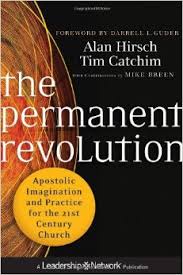
    permanentrevolutionHere’s a list of great books I read in 2015:

    The Permanent Revolution: Alan Hirsch and Tim Catchim.

    Best book I have ever read on Apostolic Ministry and the Ephesians 4:11 gifts

    The Kingdom Conspiracy: Scot McKnight.

    Pretty much anything by New Testament Scholar, Scott McKnight is excellent. I particularly loved his linking of Kingdom and Church in this book.

    Simply Good News: NT Wright.

    It’s NT Wright, he’s always good. This book focusses on the gospel as news, a proclamation.

    Fellowship of Differents: Scot McKnight.

    I didn’t like everything in this book, but it’s McKnight again and so that ensures some bits of brilliance.

    Reformission: Paul Benger. reformissionnew2

    I read my own book and I think it’s great. Loved the endorsement at the ONE EVENT from Bishop Tony Miller too.

    Leadership Pain: Samuel Chand.

    Leaders don’t experience pain! Spot the sarcasm 🙂 A must for every leader.

    The Lost World of Adam and Eve: John H Walton.

    2015 was the first exposure I had to Walton and the two books of his I read were probably my favourites.

    The Lost World of Genesis One: John H Walton.

    I loved Walton’s thought that the Genesis account is an account of how God ordered what he had already made.

    Everything New, Reimagining Heaven and Hell: Jeff Cook

    Decent little book on the difficult subject. Good follow up to the huge book I read in 2014 on this.

    Desiring The Kingdom: James K.A. Smith

    Another writer/philospher I love to read. This book was about how culture is formed.

    Legacy: James Kerr

    Great book of 15 leadership lessons from the New Zealand rugby team.

    The Heaven Promise: Scot McKnight.

    A very good book about the Christian Hope of Heaven. Not in any way escapist or fanciful. Solid gold. McKnight again.

    The Message of Jeremiah: Chris Wright.

    If you want a commentary on Jeremiah…get this one!

    Good Things: Kevin Gerald.

    Subtitled ‘seeing your life through the lens of God’s favour,’ this is a great and easy read allowing the reader to think more deeply about perspective and the truth of God’s goodness.

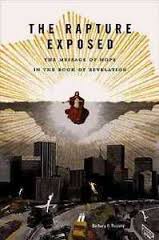
    rapture exposedThe Rapture Exposed: The message of hope in the book of Revelation, Barbara R. Rossing.

    This book was brilliant. Not for its debunking of the rapture theology as taught in the left behind series, although that was good. It was brilliant for its treatment of the message of Revelation and pulling out the immediate and continual meaning and application.

    These are not all the books that I read in 2015 but my favourites. People often ask, “How come you read so many books.” Well, I just read for at least 30 minutes last thing at night, every night and then steal reading time when I’m at home, often.

    Here’s to some great reading in 2016.


  • clcpulseMy Last Post of 2015

    I am so grateful for 2015 and all that has happened during this year, it has been an incredibly exciting year. I’m also grateful and excited for all that we have ahead of us in 2016. As I was thinking about the new year I really felt that for Churches to continue moving forward it is essential that they focus upon the following three things. I hope that you find these thoughts helpful.

    Oh Yes…Happy New Year

    1. WE MUST ENGAGE CULTURE LIKE NEVER BEFORE

    Most people continue to find Churches disconnected from the culture that they live in. They often find that the Church they know is irrelevant to the things that they enjoy and the realities that they struggle with. Contrast that with the fact that the good news message that the Church carries is as relevant and powerful as ever, but I believe we must do more work on the way we present that message. We need to be constantly refining and reinventing, using everything that is available to us to reach the generations alive at this time and in a way that is fitting for the times and regions in which we live.

    Fuelled by prayer and empowered by the Holy Spirit the message of Jesus still changes lives. As the church the way we live, act, love and communicate  provides the platform from which our message can be heard.

    The Church is still and will always be God’s plan to reach people and influence our world, therefore cultural awareness and relevance must be forever our default position.

    2. WE MUST BE OPEN TO CHANGE LIKE NEVER BEFORE

    We are creatures of habit, no doubt about it, and that means that everyone finds change difficult. Wholesale change is not something that we should be undertaking every few months or even every year. However, the ability to respond quickly to changes in our World is vitally important.

    Culture today changes far quicker than I have ever known it and my experience, in my own Church and others that I have worked with, it is that things can become outdated and outmoded faster than they ever have before. Change, it seems to me, used to be more incremental but the pace of change today is nothing short of rapid.

    Some Churches have decided to settle on a mantra of “We’ll just pray,” or “We’ll just rely on the Holy Spirit.” Now, I want you to know that I feel that both of those things are vital, absolutely essential and prayer along with the presence and power of the Holy Spirit needs to be intrinsic in every Church. At Christian Life Church we will be undertaking a 21 day fast in Jan to seek this very thing. However, I am concerned that these statements are often, at best, a cover for our not knowing how to read the cultural upheavals that are taking place and, at worst, expressions of laziness, expressions of our unwillingness to change.

    Constant prayerful evaluation is the key to staying on course when it comes to change.

    3.WE MUST BECOME LESS SELF-FOCUSSED THAN EVER BEFORE

    The Church must make the sacrifices necessary to reach its community. This does not mean that the pastoral, teaching, relational and spiritual needs of its members will not be met. But it does mean that we cannot demand that our own needs and preferences are the priority of our church life.

    Our priority is to be engaged in the mission of Jesus via the way of Jesus and for me both of those things are very clear. The mission of Jesus is to Reach People, Build His Church and Equip People to flourish in life. The way of Jesus is equally clear, he brought his Kingdom not by force but through sacrificial, self-sacrificial love. We, I suggest, must do the same!

    I’m so excited that we are having this conversation, here’s to an incredible 2016 – Your best year yet!


  • Today ended a period of serving as Executive Pastor at Alive Church in Lincoln (www.alivechurch.org.uk) under the leadership of Stuart and Irene Bell. It has been the most amazing experience and privilege. I have benefited so much from my time at Alive and greatly from the proximity of serving Stuart and Irene.

    During that time I have been blessed to bring a weekly ‘culture thought’ during Staff Meetings on Tuesdays. Today was my last thought and I thought I’d make it a good one and also share it here.

    What follows are what I genuinely believe to be the three most important culture conversations we can have.

    1. The Conversation We Have About God:

    Simply stated conversations like. “This is how God thinks,” “This is what God desires.” “This is where God lives.” On that last thought we know that God visits everywhere, places of brokenness, chaos, death, mediocrity etc. but we also know that he lives in places of healing, health, life, order and excellence etc.. He visits to rescue, save and redeem so that healing, life, order and excellence can emerge and be our experience.

    The conversation about God is extremely valuable.

    2. The Conversation We Have With Others:

    This conversations goes like this…”Here’s how we do it here.” or “That’s not how we do it here.” Statements like, “We are more generous than that,” “We are more loving than that,” “We are more passionate and committed than that.” All these conversations are hugely valuable and important.

    3. The Conversation We Have With Ourselves:

    This is the most important conversation, it happens to be the conversation I have to have all of the time, here’s how it goes… “I don’t want to live like that,” “I won’t participate in this gossip/negativity.” “I’m not going to be that person.” etc.

    This conversation is where all of culture transformation begins when I decide and you decide to BE THE CHANGE we want to see.

    Here’s to creating a healthier you, me and a better future for all that we lead.

  • MITTMitt Romney may be best known for being the Republican candidate who ran against Barack Obama in the 2012 presidential election. But even though Romney didn’t become America’s CEO, he has led companies, organizations, and one state government. He was CEO of Bain & Co. and later cofounded Bain Capital, led the 2002 Salt Lake City U.S. Olympics Organizing Committee, and was elected governor of Massachusetts in 2002.

    Romney mixed self-deprecating humor with leadership advice during a recent View From The Top talk at Stanford Graduate School of Business.

    A friend, Romney says, once told him that there are two kinds of people: those who have plenty of clarity about what makes them an effective leader and those who have “no clue why they are a leader.” The friend counted Romney in the latter group.

    Still, Romney shared plenty of leadership advice with the students who gathered to hear him during the April talk.

    Take a Break

    Romney says that when he attended college at Brigham Young University and then Harvard for a dual law and business degree, “I was convinced I would flunk out.” That insecurity propelled him to study “all the time.” He felt guilty when he took time off, but he knew the pace was not sustainable. Romney drew from his faith to find his solution. He decided to make Sunday a day of rest. “A few of those decisions early on shaped my life,” he says. In later years, after he was married and had children, he tried to “close his briefcase” when he was at home in the evenings.

    “If you take a block of time off for yourself, you may be more productive,” he says. “I don’t think it hurts to have more in your life than work.”

    Do What You Love

    As a young man, Romney was not sure what he loved to do, but he quickly learned what he did not like to do. Growing up outside of Detroit, where his father was the CEO of American Motors Corp., “I fully expected to work for a car company.” But when he tried it briefly, he hated it. “[It was] not at all like what I imagined,” he says. Then, he took a summer job at a Boston consulting firm. “It wasn’t a great analysis to say, ‘This is the next step in my career.’ I just enjoyed it,” he says. “I like consulting because I am oriented to solving problems,” he says. Finding what you enjoy doing is more important than strategically seeking out what career will make you the most money, he says.

    Know Your Values

    As the youngest in his family by six years, Romney was still living at home when his siblings had left for school and other places, and therefore he had the opportunity to spend time alone with his father, including accompanying him to work occasionally.

    “I got to watch how my dad interacted with people not realizing that I was learning.” It is why, he says, that respect for others is ingrained in him. “I don’t try to treat people with respect; I respect people,” he says. “I think it’s important to know what your values are.”

    Encourage Dissent

    Romney gets worried when he’s leading a meeting in which everyone is in agreement on an issue from the start. It is risky, he says, to make a decision unless the dissenting side has been presented and dissected, he says. In some cases, he has postponed making a decision until his team comes back with the reasons for not doing something. It’s important, he says, to have a mutual exchange of ideas before taking action. “If we can come up with the right answer, I don’t care whose idea it was,” he says.

    Complement Your Weaknesses

    “By and large, people don’t overcome their weaknesses,” says Romney, who prefers to accentuate and build the strengths of others by hiring people who complement each other’s skills.

    Learn from Strategic Mistakes

    It’s a fact of Republican life, Romney says, that few minorities vote in GOP primaries. And when seeking the Republican nomination, Romney says, his campaign focused mostly on white voters. Then, after he won his party’s nod and start visiting minority communities, residents in those places wondered “‘Where have you been?’” he says. “I think that was something we missed in our strategy sessions.”

    Define Yourself

    One of the big risks, especially for politicians, is that their challengers will define them. When he ran against Ted Kennedy in 1994 for Kennedy’s U.S. Senate seat, he sought advice about how to handle attacks by the Democratic incumbent who ultimately defeated him. Romney was told, “If you are explaining, you’re losing.” You never respond to attacks, you just attack back, he says. It’s not necessarily the best system, he acknowledges. Most of what people see of candidates are small sound bites delivered in political ads and debates. In the aggregate, the exposure voters have to a candidate is minimal. “You spent more time with me now” than during the entire presidential campaign, he told the audience.

    “I don’t know how [politicians] can do a better job of describing and showing who we are.”

    The point here, I believe,  is to live in such a way that your life, words and actions define who you are and not the words of others. 

    Have a Higher Power

    Romney frequently mentions his faith in God and the central role that plays in his life and work. He knows not everyone shares his views, he says, but he thinks everyone can benefit from believing in some brand of higher power.

    “I believe if you believe in something greater than yourself, you will be more successful.”