• san antonio

    We all want to win!

    Whether you are the United States Soccer team playing the World Cup, a PTA board member, a local church, or a multinational corporation, we all want to accomplish the vision of the organization. That’s the win.

    But how do we do it?

    VISION First, the organization must have a clear, compelling, and challenging vision that enhances the lives of those incarnating the vision.

    STRATEGY Second, the organization must have a crystal clear strategy. In order to be effective, people in the organization must know what to do and when to do what they are assigned to do.

    ALIGNMENT Third, everyone must be aligned to to the vision and strategy. Organizational Alignment is when the senior leadership aligns vision, culture, strategy, goals, teams, and individuals. Alignment shapes and guides the organization’s ability to execute its vision.

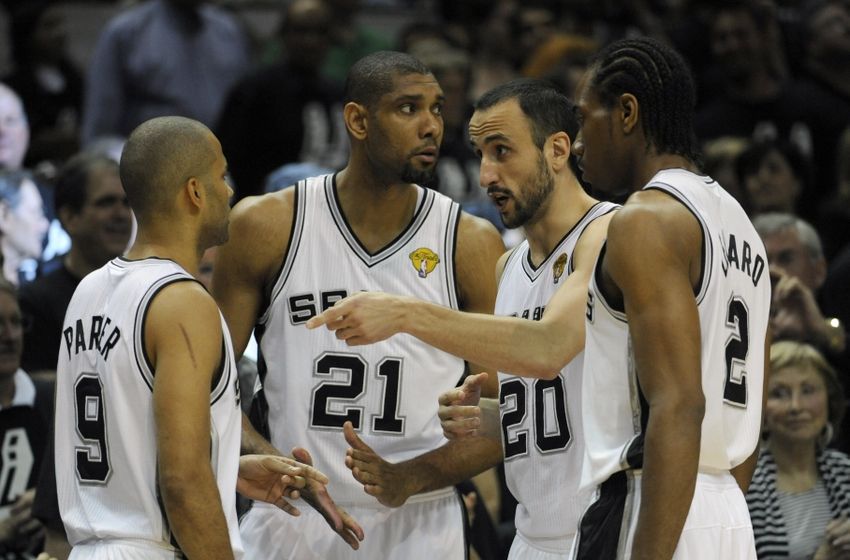
    UNSELFISHNESS Fourth, is unselfishness. Gregg Popovich, arguably the greatest coach in NBA history said this after the San Antonio Spurs won their 5th NBA Championship: “No one is bigger than the team. If you can do things our way, you’re going to get time here.””

    I hope this blog helps you win.

    May you “win” to make the world a better place!

    For churches the win is so important. it’s not a trophy that’s at stake it’s the lives of people, it’s God’s desire to see every person flourish in life.

  • THE MYTH OF MULTITASKING was written by James Clear, jamesclear.com

    The word priority didn’t always mean what it does today.

    In his best-selling book, Essentialism(audiobook), Greg McKeown explains the surprising history of the word and how its meaning has shifted over time.

    The word priority came into the English language in the 1400s. It was singular. It meant the very first or prior thing. It stayed singular for the next five hundred years.

    Only in the 1900s did we pluralize the term and start talking about priorities. Illogically, we reasoned that by changing the word we could bend reality. Somehow we would now be able to have multiple “first” things.

    People and companies routinely try to do just that. One leader told me of this experience in a company that talked of “Pri-1, Pri-2, Pri-3, Pri-4, and Pri-5.” This gave the impression of many things being the priority but actually meant nothing was.

    –Greg McKeown, Essentialism

    The Myth of Multitasking

    Yes, we are capable of doing two things at the same time. It is possible, for example, to watch TV while cooking dinner or to answer an email while talking on the phone.

    What is impossible, however, is concentrating on two tasks at once. Multitasking forces your brain to switch back and forth very quickly from one task to another.

    This wouldn’t be a big deal if the human brain could transition seamlessly from one job to the next, but it can’t. Multitasking forces you to pay a mental price each time you interrupt one task and jump to another. In psychology terms, this mental price is called the switching cost.

    Switching cost is the disruption in performance that we experience when we switch our attention from one task to another. A 2003 studypublished in the International Journal of Information Management found that the typical person checks email once every five minutes and that, on average, it takes 64 seconds to resume the previous task after checking your email.

    In other words, because of email alone we typically waste one out of every six minutes.

    The myth of multitasking is that it will make you more effective. In reality, remarkable focus is what makes the difference.Photo by: Image inspired by Jessica Hagy.

    While we’re on the subject, the word multitasking first appeared in 1965 IBM report talking about the capabilities of its latest computer. [1]

    That’s right, it wasn’t until the 1960s that anyone could even claim to be good at multitasking. Today, people wear the word like a badge of honor as if it is better to be busy with all the things than to be great at one thing.

    Finding Your Anchor Task

    Doing more things does not drive faster or better results. Doing better things drives better results. Even more accurately, doing one thing as best you can drives better results.

    Mastery requires focus and consistency.

    I haven’t mastered the art of focus and concentration yet, but I’m working on it. One of the major improvements I’ve made recently is to assign one (and only one) priority to each work day. Although I plan to complete other tasks during the day, my priority task is the one non-negotiable thing that must get done.

    The power of choosing one priority is that it naturally guides your behavior by forcing you to organize your life around that responsibility. Your priority becomes an anchor task, the mainstay that holds the rest of your day in place. If things get crazy, there is no debate about what to do or not to do. You have already decided what is urgent and what is important.

    Saying No to Being Busy

    As a society, we’ve fallen into a trap of busyness and overwork. In many ways, we have mistaken all this activity to be something meaningful. The underlying thought seems to be, “Look how busy I am? If I’m doing all this work, I must be doing something important.” And, by extension, “I must be important because I’m so busy.”

    While I firmly believe everyone has worth and value, I think we’re kidding ourselves if we believe being busy is what drives meaning in our lives.

    In my experience, meaning is derived from contributing something of value to your corner of the universe. And the more I study people who are able to do that, people who are masters of their craft, the more I notice that they have one thing in common. The people who do the most valuable work have a remarkable willingness to say no to distractions and focus on their one thing.

    I think we need to say no to being busy and say yes to being committed to our craft. What do you want to master? What is the one priority that anchors your life or work each day?

    If you commit to nothing you’ll be distracted by everything.

    Sources

    1. IBM Operating System/360 Concepts and Facilities by Witt and Ward. IBM Systems Reference Library. File Number: S360-36
  • What It Takes To Change Your Brain After Age 25

    What It Takes To Change Your Brain’s Patterns After Age 25 

    Most of our brain’s patterns are solidified by our mid-20s, but it is possible to change your brain’s pathways and patterns with these methods.

    I recently read this article and found it of great interest. – Enjoy!

    “In most of us, by the age of thirty, the character has set like plaster, and will never soften again.”

    That quote was made famous by Harvard psychologist William James in his 1890 book The Principles of Psychology, and is believed to be the first time modern psychology introduced the idea that one’s personality becomes fixed after a certain age.

    More than a century since James’s influential text, we know that, unfortunately, our brains start to solidify by the age of 25, but that, fortunately, change is still possible after. The key is continuously creating new pathways and connections to break apart stuck neural patterns in the brain.

    Simply put, when the brain is young and not yet fully formed, there’s a lot of flexibility and plasticity, which explains why kids learn so quickly, says Deborah Ancona, a professor of management and organisational studies at MIT.

    “It turns out that we, as human beings, develop neural pathways, and the more we use those neural pathways over years and years and years, they become very stuck and deeply embedded, moving into deeper portions of the brain.” By the time we get to the age of 25, we just have so many existing pathways that our brain relies on, it’s hard to break free of them.

    One reason why is because our brain is “inherently lazy” and will always “choose the most energy efficient path” if we let it, writes Tara Swart, a senior lecturer at MIT, in her book Neuroscience for Leadership.

    While you’ll never learn and change as quickly and easily as you once could, you’re also not stuck with your thought patterns from your childhood. In a recent class taught to senior management and executives, Ancona and Swart discussed ways in which people can keep their brain agile—and become a better leader. Below are the steps required to create new connections between neurons.

    FOCUSED ATTENTION

    If you want to keep your brain agile, you’re going to have to hone in on parts of the brain that you use less frequently, says Swart. And this new task has to be so challenging that you’ll feel mentally and physically exhausted after practicing the task because you’re forcing your brain to work in ways it’s unaccustomed to. This is the only way you’ll actually grow new neurons strong enough to connect with existing neurons, forming new pathways.

    For those who want to stimulate their brain, Swart recommends learning a new language or musical instrument. Or any “energy intensive” challenge that requires “conscious processing of inputs, conscious decision making, complex problem solving, memorizing complex concepts, planning, strategizing, self-reflection, regulating our emotions and channeling energy from them, exercising self-control and willpower,” Swart says.

    DELIBERATE REPETITION AND PRACTICE

    You can’t just learn a new language or musical instrument and never think about it again; you’ll forget what you learned. New connections and pathways are fragile, says Swart, and only through repetition and practice can those connections be established enough to become habitual or default behaviors.

    She writes in Neuroscience: “Depending on the complexity of the activity, [experiments have required] four and a half months, 144 days or even three months for a new brain map, equal in complexity to an old one, to be created in the motor cortex.”During this time, motivation, willpower, and self-control are necessary to achieve your goal.

    THE RIGHT ENVIRONMENT

    Without the right environment to enable change, your brain won’t be able to focus on what’s needed to create new neurons. Instead, your brain will be stuck in survival mode, meaning it will choose to travel along pathways it’s already familiar with to mitigate risk.”

    [The brain’s] need [to survive] focuses attention on the sources of danger and on trying to predict where the next threat will appear, on escape or full frontal battle rather than on an innovative or creative solution, on avoiding risk rather than managing it towards a new suite of products, market or way of doing business,” Swart writes. “And of course, the most important part of our environment is other people and our relationship with them.”

    To have the energy to keep your brain flexible and “plastic,” Ancona and Swart say your physical health needs to be in good shape, especially since your brain sucks up such a massive amount of your body’s nutrients. The hydration, nutrients, and rest you need are even more important as your brain learns, unlearns, and relearns behavioural patterns.

    “Your brain will send its resources through the blood supply to areas that it can tell that you’re focusing attention and concentration on,” Swart tells Fast Company, “or areas that you have a desire to put more energy into.”

    Romans 12:2 “Be Transformed by the renewing of your mind”
  • I’d like to recommend if you are leader in any sphere of life you consider reading LEADERSHIP PAIN by Samuel R Chand.

    Here are a few take-aways to wet your appetite.

    • You will grow to the threshold of your pain
    • Early Christians understood their vocation as Jesus’ followers to include their own suffering…through it all people saw something they’d never seen before: Faith, Hope and Love. And millions were drawn to Christ.
    • Our pain tells us that we are moving in the right direction.
    • Pain is no evil unless it conquers us – Charles Kingsley
    • Who’s holding your ladder? You’ll only climb as high as the quality and capacity of those who hold your ladder.
    • Faith is not a substitute for wisdom.
    • When you are born, you are like a key with no cuts in it. As you go through life, each wound, failure, hurt…cuts into that strip of metal. And one day there’s a click-your pain has formed the key that slips into the lock and opens your future – TD Jakes
    • A life isn’t significant expect for its impact on other lives – Jackie Robinson
  • Leadership with education

    I don’t care who you are or what you do. Be a mentor. Have a mentor.

    Don’t worry if you don’t understand mentoring. Just go engage in one of the nine behaviors that follow.

    9 Functions of a Mentor:

    1. “Define the landscape.” Focus on details to get things done – see the landscape to plot a course. Mentors are fresh eyes.
    2. “Expose ‘white space’ – define opportunities – what is needed now.” Passion disconnected from meeting needs is wasted. Sincerity is not enough.
    3. “Clarify strengths and capacities.” Tapping untapped strengths represents new directions, deeper fulfillment, and greater fruitfulness.
    4. “Identify incorrect assumptions.” Listen for limiting beliefs.
    5. “Encouragement to ‘go for it.’” Great mentors inspire action. Dreaming big is only a beginning. Dreams without action drain vitality and affirm helplessness.
    6. “Help sort out the right strategies.” Mentors bring strategic thinking to your personal strengths and individual passions.
    7. “Affirm results.” Success creates focus, fuels motivation, and confirms direction.
    8. “Point out wasted effort.” Stopping is harder than starting. One the most challenging lessons in leadership is learning that trying harder doesn’t work, if you’re stuck. Mentors point out spinning wheels and flying mud.
    9. Establish “gentle accountability.” Accountability in mentoring relationships is an agreement. It’s not imposed by dictatorial mentors.
      (The 9 functions of a mentor are adapted from, “Drucker & Me,” by Bob Buford. Drucker did not list these 9 functions. They emerged in the mentoring relationship.)
  • Came across these notes from a talk by Oscar Muriu, Pastor of Nairobi Chapel on the subject of Multiplying Leaders in a Church context. Some of the best thoughts I’ve come across.

    1. Size of The Harvest Depends on How Many Leaders

    Matthew 9:37-38 “Then he said to his disciples, “The harvest is plentiful but the workers are few.  Ask the Lord of the harvest, therefore, to send out workers into his harvest field.”
    The more harvesters we commission the greater the harvest will be. Jesus 1st strategy was to find his leaders & invest in them. If you don’t have leaders around you your impact is limited to your personal capacity.

    2. Live for the Next Generation.

    Psalm 71:18 Even when I am old and gray, do not forsake me, my God, till I declare your power to the next generation, your mighty acts to all who are to come.
    David’s was not living for his own generation. The problem when you live for your own generation is that your vision will die with your generation. Generation is 20-40yrs. Oscar uses an internship program consisting of 1yrs training and mentoring, to ensure that the next generation, are being impacted and included.

    3. Identify the budding leader and take them to the Lord in Prayer.

    Numbers 11:10-18 Moses heard the people of every family wailing at the entrance to their tents. The Lord became exceedingly angry, and Moses was troubled.1 He asked the Lord, “Why have you brought this trouble on your servant? What have I done to displease you that you put the burden of all these people on me?  Did I conceive all these people? Did I give them birth? Why do you tell me to carry them in my arms, as a nurse carries an infant, to the land you promised on oath to their ancestors?  Where can I get meat for all these people? They keep wailing to me, ‘Give us meat to eat!’  I cannot carry all these people by myself; the burden is too heavy for me.  If this is how you are going to treat me, please go ahead and kill me—if I have found favour in your eyes—and do not let me face my own ruin.” The Lord said to Moses: “Bring me seventy of Israel’s elders who are known to you as leaders and officials among the people. Have them come to the tent of meeting, that they may stand there with you.  I will come down and speak with you there, and I will take some of the power of the Spirit that is on you and put it on them. They will share the burden of the people with you so that you will not have to carry it alone. “Tell the people: ‘Consecrate yourselves in preparation for tomorrow, when you will eat meat. The Lord heard you when you wailed, “If only we had meat to eat! We were better off in Egypt!” Now the Lord will give you meat, and you will eat it.
    Moses was struggling with discouragement and burn out when he complained. He found 70 in one day!! Some of your best leaders are right there under your nose. Raise up Sons and Daughters for ministry.

    4.  Instill the 5 loves into the leaders.

    Mark 12:30-33 Love the Lord your God with all your heart and with all your soul and with all your mind and with all your strength.’  The second is this: ‘Love your neighbour as yourself.’ There is no commandment greater than these.” “Well said, teacher,” the man replied. “You are right in saying that God is one and there is no other but him.  To love him with all your heart, with all your understanding and with all your strength, and to love your neighbour as yourself is more important than all burnt offerings and sacrifices.”
    Heart = character “from the heart comes”, Soul = conviction, Mind = comprehension, Strength = competence, Neighbour = compassion

    5. Never do ministry alone. Like Jesus, always take people with you!

    Acts 4:13 When they saw the courage of Peter and John and realized that they were unschooled, ordinary men, they were astonished and they took note that these men had been with Jesus.
    They had been with Jesus and it was noticeable.
    START A MENTORSHIP PROGRAMME!!!
    FIND A LEADERSHIP PATHWAY
  • rowersYOU HAVE HEARD IT SAID THAT, “THE CULTURE DOWN THE HALL BEATS THE MANTRA ON THE WALL.” WELL THAT’S TRUE WHEN IT COMES TO TEAMS AS WELL AND THE WRONG CULTURE WILL KILL TEAMWORK NO MATTER WHAT YOU SAY.

    We often preach the value of teams and try to instill teams in our churches, whilst continuing organisational and leadership cultural dynamics that squelch any possibility for those teams to thrive. If you want to improve your team (especially your leadership team), don’t ignore these cultures that will kill your team’s ability to thrive.

    A CULTURE THAT UNDERMINES THE LEADERSHIP TEAM’S IMPORTANT CONTRIBUTION

    Talented leaders move on if the don’t feel that their contribution is essential or properly recognised. People on leadership teams want to be keenly involved in developing what’s next for the church. The long term impact of their frustration is a high turnover of leadership at this level and the church then suffers from a lack of quality leadership.

    A CULTURE OF SPONTANEITY THAT LIMITS PLANNING AND STRUCTURE

    No matter how much we talk about wanting teams to thrive in our churches, they won’t if teams don’t have the organizational environment that offers fertile soil for teams to thrive in. In particular, teams thrive in organizational contexts that privilege thoughtful, deliberative action and provide structures that allow for planning. As researchers Frank LaFasto and Carl Larson note in their book When Teams Work Best, fertile organizational soil typically exists when:

    1. Leaders set crystal-clear mission, goals and priorities that guide team efforts and establish clear operating principles.
    2. Leaders give enough time for ideas to be thought through and established before communication and implementation occurs.
    3. Organisational structures and systems foster effective group decision making.
    4. Teams enjoy ample, planned time to stay connected and work jointly on problems.
    5. Teams possess all the information they need to solve problems and make decisions.

    These structures offer the support a leadership team—and all the teams in the organisation need to be able to truly lead the church. Without them, teams spin their wheels and don’t make progress. Before your team will be successful, you may need to engage some cultural change to enable the team to thrive.

    At one church where interviews were undertaken, the senior team’s culture fought hard against any sort of planning. One pastor stated, we are more comfortable “fighting fires than building safe houses.” As such, the team constantly deferred to the lead pastor rather than seek God together and work together to develop direction and strategy for the church. Church cultures that prefer to fight fires rather than do the proactive work to avoid and protect against those fires are infertile ground for thriving teams. In such cases, addressing cultural challenges might be the first step in enabling a team to truly lead the church.

     A CULTURE THAT REMOVES REAL-TIME FEEDBACK AND ACCOUNTABILITY

    “Wounds from a friend can be trusted, but an enemy multiplies kisses.” (Prov 27:6).

    Feedback is the breakfast of champions, and mutual accountability is the not-so-secret success ingredient of exceptional teams. But too often, for a variety of reasons, team members avoid lovingly wounding a teammate, neglect offering feedback and refuse to hold one another accountable for their contributions to the team. That behavior is often learned in the larger church culture, where biblical accountability and confrontation is not pursued.

    If your church avoids confrontation and biblical accountability, chances are that your team will never gel or perform at its peak. Your team as a whole needs feedback on its collective performance, and individual team members need feedback about what they contribute to the team. Your team needs faithful friends who will tell the truth, even when it stings. Without confronting the (sometimes painful) truth, your team doesn’t have the insight to improve nor the fuel to do its job of effectively leading your church.

    Adapted from: Teams That Thrive by Ryan T. Hartwig and Warren Bird

  • 12 Actions of the Greats

    1. Responsibility: spoke about this yesterday (see my notes)
    2. Mindset: Desire for more is not evil. The greats have a strong belief system. Fear, self doubt, intimidation don’t cripple the greats. Godfidence. If you think I’ll never do that, you probably won’t.

    Van Gogh only sold 2 paintings in his life time, but he kept painting. His brother bought the 2 paintings, today his paintings are worth millions. Don’t quit, don’t give up.

    80% of success is in the mindset

    3. Passion: Don’t ask what the world needs, ask what makes you come alive. Half heartedness is a certain guarantee of mediocrity. Passion issues from a fervent commitment to one’s cause. What you hate is a clue.

    When you are doing what you love, what you love will reward you.

    4. Imagination: People of greatness know how to think in innovative ways, creative ways. Imagination is a God thing, it’s not a new age thing. Seeing where you are going in the future. Little victories always lead to big successes.

    5. Relationships: No one succeeds alone.

    Joke: A friend will help you move a good friend friend will help you move a dead body.

    6. Focus: You can do anything you can’t do everything. The reason people fail is broken focus. Your life follows your dominant thoughts. What you think about the longest becomes the strongest. Focus creates strength (Grandmother moves a car off of her Grandchild, true story USA)

    7. Courage: Life shrinks or expands according to one’s courage. In church we would probably call this faith.

    8. Persistence: too many people stop mid-stream. What do you do when the airplane hits turbulence? Hold your nerve.

    9. Integrity: great people say what they mean, mean what they say.

    10. Adaptability:

    11. Generosity: purpose to fulfil great commission.

    12. Wisdom:

    Offerings:

    Isaiah 61 spirit is on you
    you have to be a giver
    you are a deliverer
    your words: words create doors,
    don’t apologise, people are not against giving
    don’t make statements like, ‘visitors you don’t need to give,’ its an opportunity.
    Don’t rush it, don’t get people to stand up.
    Don’t act like it’s painful.
    Don’t ask unqualified people to take the offering.
    Do talk about it, show appreciation,

  • PhilPringle

    Matthew 16:13-18

    The Four Essential Areas of Leadership (continued)

    1. Vision Caster
    2. Team Builder
    3. Decision Maker
    4. Problem Solver

    Vision Caster (cont)
    Positioning Yourself in FAITH

    God lives in the positive mode

    Faith enables you to function properly even when you have tough things happening.
    Three Areas of Faith

    1. Faith in God:
    2. Faith in Others: (team) environment of believing in people is what this generation is looking for. As soon as you’ve got a context you’ve got discipleship. If they’re teachable we can train them. Don’t complain about what you didn’t train.
    3. Faith in You: This is the weakest link generally in most every minister. Jesus called self image sacred ground. “If you say ‘you fool’ you are in danger of hell”This is the ground under attack: “If you are the son of God…” The day that you learn to love who you are is one of your greatest days of victory.

      Every person is completely unique. You can’t use personality types stereotypically against people. e.g. “you silly sanguine, you cold-hearted choleric.”

      A lot of christian thinking is against this. What will this do to people? It will help maximise your potential.

      If you don’t love you, you won’t love your team.

      God isn’t wanting to beat you down, he’s wanting to put new clothing on you, a fresh way of thinking.

      Condemnation is the enemy of a sincere heart, a heart that wants to please God etc. It’s the enemy that wants to rub it in, Jesus wants to rub it out!

    TEAM BUILDING

    You will not fulfil your dream without your team

    A dream team happens because:

    1. You select them right: Do I want another 100 of this person? Jesus built through correction. A cultural download happens in the moment of correction. “Those who receive correction are children.”
    2. Teachability: Top of the list.

    Build your team and they will build your church.

  • leadsummit

    The best is yet to come as more to do with us than we think it does.

    The Blessing of Low Maintenance People

    Low maintenance people are not celebrated but they are a gift to the local church.

    The benefit of having been around for decades is that you can see patterns. Everybody loves low maintenance people but we don’t realise that’s what we love about them because we haven’t named it.

    Some people are professionals at being High Maintenance.
    Many low maintenance people didn’t start that way. Jesus had, Peter, James and John etc.

    • High maintenance people (HMP) constant sense of urgency.
    • HMP always have a drama attached to their life
    • HMP are never satisfied
    • HMP are obsessed with details
    • HMP bring problems without solutions
    • HMP do not believe they are HMP

    LOW MAINTENANCE PEOPLE

    1. emotionally inexpensive: (are like stepping onto a battleship HMP are like getting into a canoe), not feeling driven
    2. not attention seekers: don’t care about recognition, applause etc.
    3. popular:
    4. agreeable: focus on the common ground
    5. thick skinned:
    6. deep root into God rather than a straw into people: (straw sucking life out) if the only time you open your bible is when the pastor asks you to we have a problem.

    Thought this talk Paul celebrated a couple in the Church in Bradford. Alistair & Sylvia Humphries…